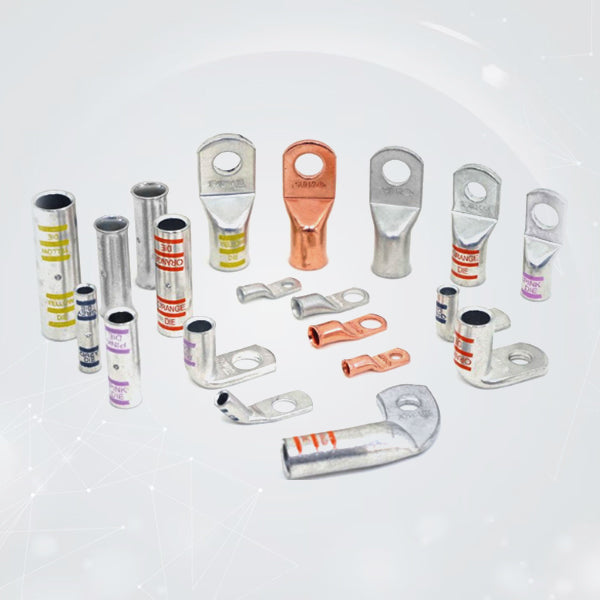


6 Gauge Battery Lug Amp Rating Chart: How Much Current Can It Handle?
If you've been sizing out cables for a battery project and keep landing on 6-gauge wire, you've probably asked yourself the same question everyone asks at this point: how much current can a 6 gauge battery lug actually handle before things start going wrong?
It's a fair question — and one that deserves a straight answer rather than a vague "it depends." So let's get into it.
First, a Quick Refresher on What the Lug Actually Does
The lug at the end of your cable isn't just a piece of metal that holds the wire in place. It's the handoff point — the spot where the current in your cable transfers to whatever it's connecting to. A battery post. A busbar. A terminal block. A fuse holder.
If that handoff is smooth and clean, the current passes through without any drama. If the lug is undersized, made from weak material, or poorly crimped, the handoff becomes a friction point. Friction means heat. Heat means trouble.
That's why matching your lug to your wire gauge — and understanding what that gauge can actually carry — matters as much as any other decision in your wiring setup.
What 6 AWG Wire Is Rated to Carry
Before talking about the lug, it's worth understanding the wire itself.
Six-gauge copper wire is a solid mid-range cable. It's flexible enough to route through tight spaces, thick enough to carry real current, and common enough that you'll find it in automotive wiring, solar charge controller connections, inverter cables in smaller setups, marine accessory circuits, and RV wiring panels.
The amp rating of 6 AWG wire isn't a single fixed number — it shifts depending on a few real-world factors:
Insulation type plays a big role. Wire rated for higher temperatures can carry more current because the insulation won't break down as quickly under heat. Standard PVC insulation is rated to about 140°F (60°C). High-temperature insulation like THHN or cross-linked polyethylene handles 194°F (90°C) or more, which means the wire can run hotter — and carry more current — before the insulation becomes a problem.
Ambient temperature affects things too. Wire running through a hot engine bay or an RV compartment that bakes in the sun is already starting to warm. That means it has less headroom before hitting its temperature limit than the same wire running through a cool basement.
Length of the run matters more than most people realize. The longer the cable, the more resistance it adds to the circuit. A 6 AWG wire running 3 feet behaves very differently from the same wire running 20 feet. For longer runs, you often need to go up a gauge size to compensate.
With those variables in mind, here's how 6 AWG wire generally performs across common installation conditions:
6 AWG Amp Rating Reference Chart
|
Installation Type |
Temperature Rating |
Approximate Amp Capacity |
|
Single conductor, open air |
60°C (140°F) |
55–65 amps |
|
Single conductor, open air |
75°C (167°F) |
65–75 amps |
|
Single conductor, open air |
90°C (194°F) |
75–85 amps |
|
Bundled or enclosed wiring |
60°C (140°F) |
40–50 amps |
|
Bundled or enclosed wiring |
75°C (167°F) |
50–60 amps |
|
Automotive / marine (short runs) |
75°C (167°F) |
60–80 amps |
|
DC solar / battery wiring (short runs) |
90°C (194°F) |
75–90 amps |
These figures are consistent with NEC (National Electrical Code) ampacity tables and SAE wiring standards used in automotive and marine applications. Always confirm against the specific wire manufacturer's rating for your exact cable — especially if you're using fine-strand or welding cable, which can have slightly different ratings than standard building wire.
What This Means for the Lug
A 6 awg terminal lug is designed to terminate 6 AWG cable — meaning the barrel inner diameter is sized to accept the conductor without being so loose that strands splay out, or so tight that you can't fully seat the wire.
The lug itself doesn't have an independent amp rating separate from the cable. What it does have is a responsibility to match the cable's capacity without becoming a bottleneck. A quality lug made from pure copper with correct barrel dimensions and a proper crimp will carry the same current as the cable it's attached to — no more resistance, no extra heat.
A cheap lug made from thin-walled or low-conductivity metal will create a restriction right at the termination point. You'll see voltage drop at the connection, heat building up at the barrel, and eventually the kind of failure that takes your whole system offline.
This is why the lug material and construction matters every bit as much as the cable itself.
Common Applications for 6 AWG at These Current Levels
Knowing that 6 AWG comfortably handles 55–80 amps depending on conditions, here's where it shows up most often in real builds:
Solar charge controller connections. Most residential and off-grid solar charge controllers are rated between 30 and 60 amps. The cable run from controller to battery bank is exactly where 6 AWG lives comfortably. A properly terminated 6 gauge terminal lug at each end keeps that connection clean and resistance-free.
Inverter input cables on smaller inverters. A 12-volt inverter rated at 600–800 watts pulls roughly 50–70 amps at full load. That puts it right in the wheelhouse for 6 AWG on a short run — typically anything under 5 feet from battery to inverter.
Trolling motor leads. Most trolling motors on the market pull between 30 and 60 amps at maximum draw, depending on the model. Six-gauge wire handles this well, and the cable runs on a fishing boat are usually short enough that voltage drop isn't an issue.
Secondary battery connections in vehicles. Auxiliary battery setups in trucks, Jeeps, and vans often use 6 AWG for the run from the isolator to the secondary battery — especially when that secondary battery is powering accessories like a 12-volt fridge, lighting, or a compressor.
Marine accessory circuits. Shore power distribution, onboard lighting panels, bilge pump wiring on larger boats — 6 AWG handles the current loads in these applications without being oversized and expensive.
Choosing the Right Lug for 6 AWG Cable
Once you know your wire gauge, picking the right lug comes down to three things.
Conductor compatibility. The barrel of the lug needs to match your cable. Standard 6 AWG solid or stranded copper wire has a conductor diameter of approximately 0.162 inches. Fine-strand cable — the type used in welding wire and premium flexible battery cable — has a slightly larger overall diameter because of the extra stranding. Check the lug's specified conductor range before ordering. A 6 awg ring lug from a quality manufacturer will specify the acceptable conductor diameter range right in the product description.
Stud size. The ring at the end of the lug has to fit the bolt or stud it's connecting to. Common stud sizes for 6 AWG applications include #10 (3/16"), 1/4", and 5/16". If you're connecting to a battery post, check the post diameter. If you're connecting to a busbar, check the busbar bolt size. Getting this wrong means the lug either won't fit at all or will sit so loosely on the stud that it creates a high-resistance connection.
Material. For most battery, solar, and automotive applications — anywhere that isn't constantly exposed to salt air or extreme moisture — bare copper lugs are the right call. Pure copper provides the most direct, low-resistance connection available. For marine environments, tinned copper adds a corrosion-resistant layer that protects the connection in humid, salty conditions.
How to Get the Most Out of Your 6 AWG Termination
The lug is only half the equation. How you install it determines whether it performs at the cable's full rated capacity or becomes a weak point in your circuit.
Strip the right amount of insulation. The copper strands need to fill the entire barrel of the lug — but you shouldn't have bare copper sticking out beyond the barrel entry. Strip to the barrel depth of the specific lug you're using. Most quality lugs have a barrel length of about 3/4 to 1 inch for 6 AWG.
Seat all the strands fully. Before crimping, make sure every single strand of the cable is inside the barrel. Fan out the strands, insert them, then rotate the cable slightly to gather everything together inside the barrel. One stray strand outside the crimp zone means one less strand carrying current — and a potential sharp edge that can cut through heat shrink over time.
Use an appropriate crimping tool. For 6 AWG, a ratcheting hex crimper gives you the best result. It applies consistent, even pressure around the barrel and won't release until the crimp is fully compressed. Avoid pliers, adjustable wrench crimps, or anything that compresses from one side only. An uneven crimp leaves gaps inside the barrel where resistance builds up.
Seal with adhesive heat shrink. After crimping, slide a piece of dual-wall adhesive-lined heat shrink over the joint — it should cover the entire barrel plus about half an inch of insulation on each side. Apply a heat gun and let the adhesive flow out from both ends. This seals moisture out completely and adds strain relief so the crimp doesn't flex with vibration.
When 6 AWG Isn't Enough
Knowing the limits of 6 AWG is just as useful as knowing what it can handle.
If your load exceeds 80 amps on a consistent basis, you're pushing the upper edge of what 6 AWG wire should carry — especially in an enclosed space or a warm environment. Step up to 4 AWG, which handles roughly 85–105 amps depending on conditions.
If your cable run is longer than 10 feet and you're running close to the wire's capacity, voltage drop becomes a real concern. Either go up a gauge size or keep the run as short as possible by positioning your components close to the battery.
If you're in a marine environment with constant exposure to salt air and humidity, switch from bare copper to tinned copper. The tin plating on a tinned lug prevents the oxidation that bare copper is susceptible to in those conditions — keeping the connection clean and low-resistance for years longer.
Wrapping It Up
Six-gauge wire sits in a sweet spot for a wide range of common battery and solar applications — capable enough to handle 55 to 80-plus amps depending on the setup, flexible enough to route easily, and available in termination hardware that covers every common connection type.
The key is making sure your 6 gauge terminal lug matches the cable, fits the stud, and is installed with the right tool and the right technique. Do those things right, and the termination point becomes a non-issue — just a solid, reliable connection that carries current cleanly for years without demanding any attention.
Pick the wrong lug, crimp it poorly, or skip the heat shrink, and that tiny connection point becomes the most expensive part of the whole build.
Shop SELTERM 6 AWG bare copper battery cable lugs — available in multiple stud sizes and pack quantities at selterm.com/collections/6-awg-bare-copper-lugs-battery-cable-ends