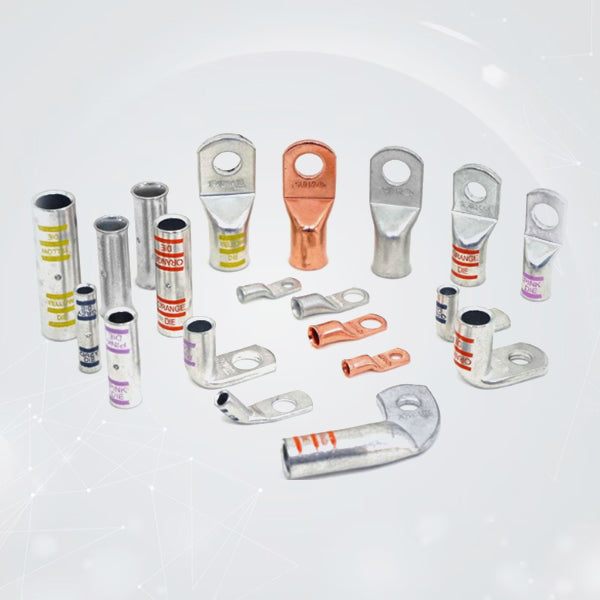


How 90 Degree Battery Lugs Help Reduce Cable Stress and Bending Damage
Cable stress kills connections. Not dramatically — slowly, invisibly, until one day you've got a dead panel or a boat that won't start. If your wiring runs into a tight corner and you're forcing straight lugs to make that bend work, you're already losing. Grab Selterm's 90 degree battery lugs here and solve it clean before it costs you a repair call.
Straight Lugs in Tight Spots Are a Slow Disaster
I've watched guys force a 2/0 cable around a 90 degree turn with a straight lug. Looks fine day one. By summer it's work-hardened, the jacket's cracking near the barrel, and the connection resistance is climbing. Copper isn't forgiving. Every time that engine starts, the cable vibrates. Every time you open the hood, you're tweaking that bend. Copper work-hardens fast — 50 flex cycles in and strands are already fatiguing at the crimp edge. 90 degree battery cable lugs exist for exactly this problem. The bend is built into the terminal, not forced into the wire.
What "Cable Stress" Actually Means in the Field
It's not dramatic. No sparks, no pop. Just metal fatigue building at the worst possible point — right where the cable exits the lug barrel. That's where the insulation is thinnest, where the crimp transitions to free cable, and where any angular load concentrates. Seen it: a 3/8 stud terminal on an RV inverter, perfect crimp, but the cable hammered into a 90 degree arc. Six months later, two strands had broken inside the jacket. Resistance jumped. The inverter started tripping on load. Nobody suspected the lug.
The Physics Is Simple—Bend Radius Matters
4/0 welding cable has a minimum bend radius around 5 inches. Most battery compartments give you 2. You can muscle the cable into place, but you're holding it there with nothing but the lug's grip and whatever strain relief you added (spoiler: none). A 90 degree battery terminal relocates that bend into machined copper — a controlled, fixed geometry with full barrel support all the way through. The cable exits straight. No radius. No fatigue point. The physics stops working against you.
RV Wiring Is Where This Shows Up Most
Tight battery boxes, inverter cabinets tucked under dinettes, shore power feeds routed along the frame rail. RV builders deal with this every job. A straight 2/0 x 3/8 lug into a corner-mounted terminal means the cable wants to run right into the sidewall. So it gets bent. Stuffed. Sometimes kinked. A set of 90 degree battery cable ends turns that same run into a clean drop — cable comes off the terminal at a right angle, runs flat along the surface, no compression, no kink, no strain.
Pro tip: always do a dry fit with the cable before you crimp. Find the natural lay of the wire and pick the rotation of the lug to match it.
Marine Installs Punish Bad Bends Harder
Salt air, constant vibration, bilge humidity — a boat doesn't forgive marginal connections. I've pulled cables off engine starts where the lug looked fine externally but the copper inside the barrel had corroded from the barrel edge inward. Moisture wicked in along stressed strands. Tinned copper slows that down, but it doesn't stop it if you've got a mechanical stress point letting moisture in at the insulation break.
- Use tinned copper 90 degree battery lugs in any marine application — bare copper oxidizes fast
- Pair with adhesive-lined heat shrink over the barrel and 2 inches up the cable
- Seal the exit point, not just the terminal face
- Inspect annually — squeeze the cable near the barrel and feel for stiffness or crunch
Solar Setups Have the Same Problem, Different Angle
Roof-mounted panels feeding into a controller in a low-profile cabinet. The positive cable drops through the ceiling, makes a hard turn, and lands on a busbar. With a straight lug, that cable has to sweep wide — sometimes it physically can't make the connection without looping back on itself. A 90 degree battery cable lugs lets it drop, turn, land. Clean. No loop, no excess length flopping around behind the panel, no added resistance from a longer run you didn't need.
Truth? Half the solar installs I've seen could cut 6-8 inches of cable per run just by using the right terminal geometry from the start.
Crimping Them Right Is Non-Negotiable
A 90 degree lug doesn't compensate for a bad crimp. You still need the right hex die — match the die set to the lug's barrel OD, not the wire gauge label. Pull test after every crimp: 40 lbs minimum on 2/0, more on 4/0. The cable should spin the lug before it pulls out. I've fumbled hammer-ons with strands cut — the barrel seated crooked and the die rolled the copper instead of compressing it. Ratchet hydraulic crimpers are worth every dollar for this gauge wire.
- Strip length must match barrel depth exactly — use the lug as a depth gauge
- Fan strands slightly before insertion, then straighten — gets full strand count in
- Two die positions on large barrels: one near the cable entry, one toward the tip
Selterm's Lineup Handles This Clean
Selterm nails it here with a proper range of 90 degree battery cable ends — multiple gauges, stud sizes, tinned copper construction. The barrels are consistent, the bend angle is machined and true, and they work with standard hex die sets. No chasing down metric-adjacent sizing or fighting a barrel that's a hair too short for full insertion. When you're doing 12 connections on a solar build or rewiring a truck's secondary battery setup, consistent parts matter as much as good technique.
Cost of Getting It Wrong
A set of 90 degree battery lugs runs a few dollars per terminal. A service call to trace an intermittent draw, open up a battery box, find a failing connection, and rerun cable? Minimum two hours shop time. On a boat, add haulout costs if it's an inboard. The math isn't close. Beyond cost — a failing battery connection under load is a heat event. Heat events in enclosed compartments with other cables, insulation, and sometimes flammable vapors are not hypotheticals. This is the fix that costs almost nothing relative to what it prevents.
No-BS Wrap
If you're running battery cable into a tight spot, the 90 degree battery terminal isn't a luxury — it's the correct part for the job. Forcing a straight lug into a bent cable run introduces fatigue right where you can't see it, in a location that matters most. Selterm's 90 degree battery cable lugs give you the right geometry, tinned copper construction, and consistent barrels that crimp properly for the first time. Your 90 degree battery cable ends should match the cable's natural path, not fight it. Whether it's an RV build, a marine repower, or a solar cabinet install, this is how you protect the connection for the long run.