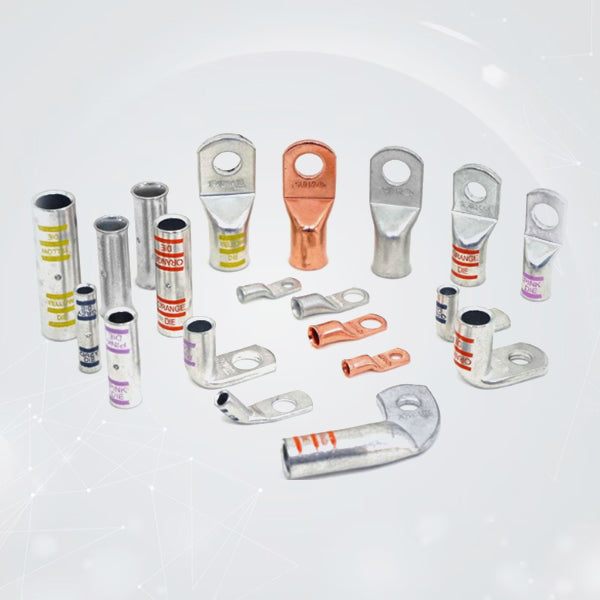


How Corrosion Affects 0 Gauge Lugs and How to Prevent It
Overlooking a trace of surface discoloration on a small accessory lead won't tip your system over the edge. However, when dealing with commercial-grade power infrastructures, letting tarnish compromise your primary connections signals a total system failure waiting to happen. High-capacity lines serve as the central power corridors for off-grid battery banks, hydraulic recovery winches, heavy commercial vehicle starters, and massive solar power arrays. At this layer of power management, you are pushing massive current volumes where even the slightest thermal bottleneck causes rapid systemic damage.
The exact millisecond an unsealed connection allows oxidation to wedge its way between your conductive surfaces, your overall electrical efficiency plummets. Smashing these thick metal sleeves with a workshop hammer or crimping them down with standard garage locking pliers fails because it leaves major interior voids. Your circuit demands an airtight, gas-tight fusion that bridges full amperage without creating localized hot spots. Recognizing how chemical breakdown undermines your 0 gauge lugs is the only way to safeguard expensive power converters and sensitive digital control gear from sudden thermal degradation.
Tracking the Path of Interior Terminal Rot
Many generic power endpoints found in local parts store bins are manufactured from thin brass stampings or cast from inexpensive zinc amalgams finished with a micro-thin flash of copper plating. Once exposed to ambient humidity, caustic battery outgassing, or chemical road spray, these metals trigger a swift oxidative process that destroys structural integrity. The resulting powdery green copper carbonate buildup behaves as a severe electrical insulator. Instead of remaining on the exterior of the landing pad, this corrosion migrates straight up the inner barrel, coating the fine interior cable filaments. This internal crust chokes voltage delivery and forces your charging architecture to work twice as hard to push power past the constriction.
Heavy-duty work trucks, marine equipment, and remote solar stations expose connections to brutal mechanical fatigue. Constant harmonic vibrations from diesel engines or rugged work sites will loosen unannealed, low-grade metal fittings. The moment a cheap barrel relaxes its grip by a fraction of a millimeter, atmospheric moisture floods the core, accelerating underlying metal decay. Utilizing a seamless, thick-walled 0 gauge battery cable lug is the only way to lock out atmospheric ingress, permanently securing the dense interior wire pack from environmental destruction.
Eliminating Internal Air Pockets with Cold-Weld Pressure
Achieving unconditional circuit stability under maximum amperage draws comes down to the structural grain of your underlying metal. High-load distribution networks require terminals forged out of seamless, unadulterated C11000 electrolytic copper. This ultra-pure grade yields the absolute highest electrical and thermal performance ratings achievable in industrial manufacturing. Because pure, specialized copper is inherently malleable and uniform, it flows smoothly when subjected to severe multi-ton crimping forces.
When compressed properly, a seamless 0 gauge copper lugs barrel wraps uniformly around every individual wire strand without splitting down a longitudinal seam. This extreme mechanical compression cold-welds the wire strands and the copper walls into one completely homogenous block of metal, purging every microscopic air pocket. This absolute elimination of internal space is vital, as hidden internal gaps trap moisture from daily temperature swings, forming tiny corrosion cells that silently corrode your power pathway from the inside out.
Advanced Field Diagnostics and High-Amperage Crimping Protocols
An old-school garage workaround that consistently ruins high-amperage lines is filling a heated terminal barrel with melted solder. While solder offers a solid initial connection, professional aviation and heavy automotive compliance codes completely ban the practice in high-vibration applications. Capillary action pulls the molten solder straight past the barrel, wicking up the flexible cable strands. Once cool, this hardens the wire, converting a highly flexible power line into a brittle, solid rod. As heavy equipment vibrates, all physical stress targets the sharp transition point where the flexible casing meets the rigid, soldered core, causing individual strands to snap right at the back of the lug.
The industry standard for a permanent, vibration-proof circuit requires a direct mechanical cold-weld using a premium 0 gauge battery lug.
- Strip Down to Untarnished Metal: Never attempt a mechanical crush over dark, oxidized, or greasy copper core strands. Cut back the weathered cable until you reach bright, mirror-like copper, and scrub the exposed bundle with a stainless steel wire brush to maximize surface-to-surface conductivity.
- Verify Insulation Seating: Gauge the insulation strip depth perfectly against the inner length of the terminal sleeve. Insert the wire fully until the copper bundle firmly presses against the built-in inspection window, keeping any exposed gap between the jacket and the barrel shoulder under a sixteenth of an inch.
- Apply a Full Hexagonal Die Cycle: Match your exact wire profile to the corresponding die set on a heavy-duty hydraulic or manual compound crimping tool. Drive the tool through its complete mechanical stroke to ensure the metal undergoes a full structural flow, transforming the individual strands into a solid copper block.
- Enclose the Junction in Dual-Wall Tubing: Position a section of heavy-duty, 3:1 adhesive-lined heat shrink directly over the raw barrel junction and apply even heat. Ensure the internal hot-melt sealant liquefies and visible beads squeeze out past the bottom lips of the sleeve, establishing a permanent, waterproof seal against pooled moisture, chemical solvents, and grease.
Thermal Troubleshooting and System Rebuild Rules
Safeguarding high-current power grids requires proactive diagnostic sweeps to isolate structural degradation before it triggers an inline fire. Every operating season, open your primary power bays to run a physical inspection on all high-amp junctions. Do not rely on visual checks alone; check the physical torque of every retaining nut and inspect the heat shrink boundaries for hairline cracks or brittleness. Use an infrared thermal gun under peak load conditions to identify hidden hot spots; any terminal junction running significantly hotter than the main cable jacket points directly to high internal resistance and requires an immediate teardown.
When servicing weathered terminations, never use aggressive metal files, coarse sandpaper, or steel wire wheel attachments to clear away stubborn surface oxidation from the flat mounting pad. Harsh abrasives carve microscopic grooves and irregular valleys into the soft copper face. When re-bolted, these imperfections create tiny air channels that trap salty humidity, speeding up deep galvanic pitting. Instead, clean the flat landing surfaces down to bare copper using a soft cloth and pure isopropyl alcohol, then dress the clean interface with a microscopic layer of specialized anti-corrosion paste before torquing the hardware down to spec.
If a connection shows signs of advanced thermal warping or internal strand failure, swap it out for a heavy-duty 0 gauge battery lug to completely eliminate structural voltage drops and restore long-term system efficiency.