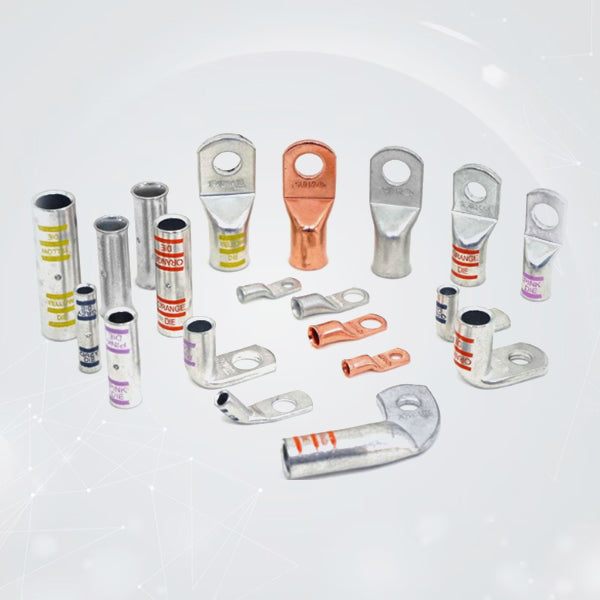


How to Match Car Audio Lugs with Wire Gauge for Best Results
Car audio systems push serious current through cables. Amplifiers draw 50-200 amps depending on power output. Poor lug-to-wire matching creates resistance, voltage drop, and hot connections that kill sound quality. Car audio lugs matched to exact wire gauge deliver clean power with maximum efficiency.
Car audio ground lug connections matter most. Ground paths handle the heaviest current. Car audio wire lugs secure power and signal cables. Car audio battery lugs feed amps directly from the battery. Proper matching prevents distortion and protects expensive equipment.
Amplifier Power Requirements Determine Wire Size
Amplifier wattage dictates minimum wire gauge. Use this chart for 12-14.4V systems:
Class D Monoblock (subwoofers):
- 500-1000W RMS: 8 AWG
- 1500-2500W RMS: 4 AWG
- 3000-5000W RMS: 1/0 AWG
4-channel amps (full range):
- 500-800W RMS: 8 AWG
- 1000-1500W RMS: 4 AWG
Rule: Never go smaller than minimum. Voltage drop above 0.5V distorts bass.
Ground Connections Need One Gauge Larger
Car audio ground lug carries the same current as power wire but faces more resistance from chassis paint and rust.
Oversizing prevents problems:
- 8 AWG power wire → 4 AWG ground
- 4 AWG power wire → 2 AWG ground
- 1/0 AWG power wire → 2/0 AWG ground
Bare metal contact essential:
- Scrape paint to shiny metal
- Apply dielectric grease
- Use star lock washers
- Check tightness monthly
Poor grounds cause alternator whine, clipping, and amp shutdowns.
Barrel Size Must Match Wire Stranding
Car audio wire lugs come in different barrel sizes for cable construction.
Welding cable (1000+ strands, most flexible): Smallest barrel ID
OFC audio cable (high-strand count): Medium barrel
Marine-grade battery cable (19-41 strands): Largest barrel
Perfect fit fills 95% of barrel space. Test fit before crimping. Insulation should touch the barrel mouth exactly.
Stud Size Matches Common Terminals
Car audio battery lugs fit specific automotive terminals.
Battery posts:
- Top post: 3/8" lug hole
- Side post: 5/16" lug hole
- GM 78-series: 3/8" lug hole
Distribution blocks:
- 1/4" studs (most common)
- 5/16" studs (high-power blocks)
Amp terminals:
- 1/4" power/ground posts
- 8-10 ga speaker posts (smaller lugs)
Crimping Creates Gas-Tight Connections
Proper compression eliminates resistance at the crimp.
Essential tools:
- Hydraulic crimper 4 AWG+ (best)
- Ratchet hex crimper with matched dies
- Never: hammer, pliers, or vise grips
Crimp verification:
- Barrel shrinks 20-25% diameter
- Smooth hexagonal pattern
- Cable resists 50+ lb pull
- Under 0.1 milliohm resistance
Heat Shrink Prevents Corrosion
Road salt, battery fumes, and underhood moisture attack connections.
3:1 adhesive-lined heat shrink required:
- Slide on before crimping
- Cover 1" cable + full lug + 1/2" palm
- Heat to 250°F until adhesive flows
- Purple adhesive confirms proper seal
Marine-grade shrink handles battery compartment heat (105°C rated).
Complete Matching Guide
| RMS Power | Power Wire | Ground Wire | Lug Size | Battery Lug Stud |
| 500-800W | 8 AWG | 4 AWG | 8 AWG lugs | 3/8" |
| 1000-1500W | 4 AWG | 2 AWG | 4 AWG lugs | 3/8" |
| 2000-3000W | 2 AWG | 1/0 AWG | 2 AWG lugs | 3/8"-1/2" |
| 4000W+ | 1/0 AWG | 2/0 AWG | 1/0 AWG lugs | 1/2" |
Voltage Drop Calculations
Maximum 3% drop recommended (0.4V at 14V):
8 AWG (40 ft round trip):
- Safe to 50 amps
- 1000W Class D maximum
4 AWG (40 ft round trip):
- Safe to 80 amps
- 1500W Class D maximum
1/0 AWG (40 ft round trip):
- Safe to 150 amps
- 3000W Class D maximum
Longer runs need thicker wire.
Distribution Block Sizing
Car audio ground lug connections at blocks need special attention.
Power distribution (4-8 outputs):
- Match block stud to main power lug
- Equal length cables to each amp
- 1/4" output lugs for 8-4 AWG
Master ground block:
- 2/0 AWG input lug
- Multiple 4-2 AWG output lugs
- Direct chassis ground with 2/0 AWG
Competition SPL Requirements
Sound Pressure Level vehicles demand extreme current.
10,000W RMS systems:
- 0 gauge main power/ground
- Multiple 1/0 runs to amps
- Car audio battery lugs 1/2" or 3/8"
- Second alternator feed (0 gauge)
Battery bank upgrades:
- 2x Group 31 AGM batteries
- 1/0 interconnects
- Heavy copper bus bars
Installation Sequence for Perfect Results
- Calculate total RMS and select wire gauge
- Oversize ground one gauge larger
- Select matching lugs for every terminal
- Crimp with proper dies (hex pattern)
- Heat shrink every crimp (adhesive-lined)
- Clean all terminals (wire brush)
- Torque precisely (no guessing)
- Test voltage drop (<0.4V at full power)
Troubleshooting Mismatched Setups
Alternator whine:
- Ground lug too small or poor chassis contact
- Fix: Upgrade car audio ground lug, scrape paint
Clipping at half power:
- Power wire or lugs undersized
- Fix: Match RMS rating exactly
Hot distribution block:
- Poor crimps or wrong lug size
- Fix: Recrimp with matched dies
Amp thermal shutdown:
- Voltage drop from small car audio battery lugs
- Fix: Upgrade to proper gauge
Maintenance Keeps Performance Optimal
Monthly checks:
- Visual inspection for heat marks
- Tug test all crimps
- Verify heat shrink seals
Seasonal service:
- Retorque battery terminals
- Clean corrosion from ground points
- Measure voltage drop at full volume
Cost vs Performance Reality
Budget mismatch: $20 wire + $5 lugs = $300 amp damage
Proper matching: $80 wire + $20 lugs = reliable 3000W system
Quality car audio lugs protect $2000+ in amplifiers and subs.
Final Thoughts
Matching car audio lugs to wire gauge transforms system performance. Clean power reaches amplifiers. No distortion. No shutdowns. Maximum SPL.
Car audio ground lug prevents noise and clipping. Car audio wire lugs deliver current efficiently. Car audio battery lugs feed power directly.
Essential matching rules:
- Power wire matches RMS rating exactly
- Ground wire one size larger
- Lugs fit cable stranding perfectly
- Heat shrink seals every connection
- Test voltage drop after install