

How to Select Copper Cable Lugs for Automotive and RV Battery Systems
A battery cable can be thick, expensive, and perfectly sized for the job, yet the connection at the end can still let the whole setup down. That is why choosing copper wire lugs is not simply a matter of finding something that fits over the cable. The cable gauge, stud size, lug shape, available space, and the way the cable will be used all come into play. Get those details right, and the finished connection is usually something you never have to think about again.
Start With the Cable, Not the Lug
The first number to check is the cable gauge.
A lug made for 2 AWG cable is not meant to be used on a 4 AWG cable just because the two look similar. The conductor needs to sit properly inside the barrel, with enough material there for a solid crimp.
This becomes more important with battery cables because they are often carrying substantial current. A poor fit can create a weak mechanical connection and add resistance where you don't want it.
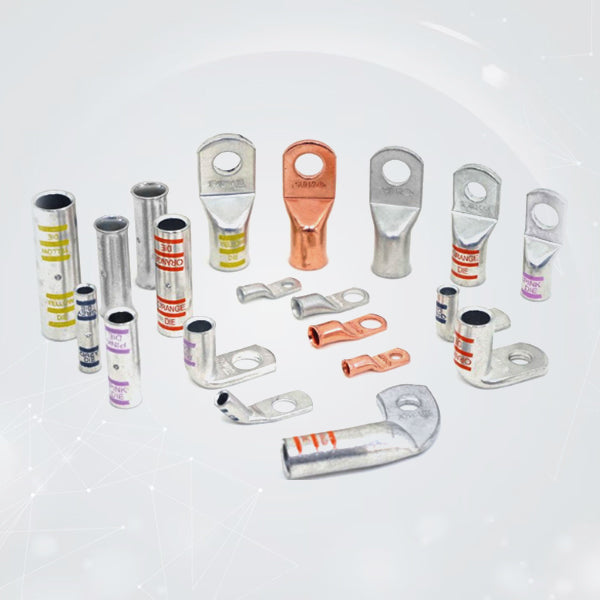
SELTERM's bare copper lugs range covers cable sizes from 8 AWG through 4/0 AWG, along with 250 MCM options. That gives you plenty of room to match the lug to the actual cable rather than trying to make one size work for everything.
If you're unsure about the cable size, check the markings on the cable itself. Don't rely on appearance. Heavy insulation can make a smaller conductor look much larger than it really is.
Then Check the Stud
Here's where people often make a second mistake.
They find the correct lug for their cable gauge and assume the job is done. It isn't.
The hole in the lug needs to match the stud or bolt it will sit on. A battery terminal might use a 1/4-inch stud, while another connection elsewhere in the same vehicle could use 3/8-inch hardware.
SELTERM's range includes 1/4", 5/16", 3/8", 1/2", and #10 stud options. Its 2 AWG range, for example, includes versions for both 5/16" and 3/8" studs.
Take the measurement before ordering. It takes a minute and saves the rather annoying situation of having the right cable terminal sitting on the bench with the wrong hole in it.
Look at the Space Around the Connection
Not every battery compartment gives you room to work.
An RV battery compartment can be tucked into a corner with cables coming in from awkward directions. Under a vehicle hood, the available space can be even tighter.
That is where the shape of the lug starts to matter.
Straight lugs are perfectly fine when the cable can run naturally from the connection. But forcing a thick battery cable into a sharp bend immediately after the terminal isn't a great solution.
SELTERM also offers 90-degree versions for situations where a bent connection makes more sense. Building the angle into the lug can reduce the amount of bending needed in the cable itself.
Before choosing one, look at where the cable needs to go after it leaves the terminal. Sometimes the right answer becomes obvious once you stop looking at the lug in isolation.
Not Every Lug Needs to Look the Same
There are also differences in the size of the flat part of the lug.
A regular pad works for many everyday connections. A wider pad gives you a larger clamping surface when the installation calls for it.
This can be useful around battery banks, distribution points, and other connections where you have enough room for the additional width.
SELTERM lists regular, wide, and extra-wide pad options in its bare copper range.
There is no prize for choosing the widest one available. The pad simply needs to suit the hardware and the space around it.
Why Bare Copper Still Has a Place
For an automotive or RV battery system, material choice doesn't always need to be complicated.
Bare copper remains popular because copper conducts electricity very well and works nicely for high-current cable terminations. SELTERM's bare copper products are made from 99.9% pure annealed copper, with several models available for different cable and stud combinations.
The catch is the environment.
A connection sitting somewhere dry and protected has a different set of concerns from one exposed to road spray, salt, moisture, or marine conditions. If the connection will live in a harsh environment, corrosion protection may become more important than it would be inside a sheltered battery compartment.
For a typical protected automotive or RV installation, though, bare copper can be a straightforward choice.
Think About the Cable Run Too
A lug doesn't exist on its own. The cable attached to it still has to reach wherever you're taking the power.
Try to picture the finished installation before crimping anything.
Will the cable have to make a tight turn? Is it going to rub against a metal edge? Will vibration pull against the terminal? Is there enough room to tighten the connection without putting the cable under stress?
These details are easy to ignore when you're holding a loose cable on a workbench.
Once everything is installed inside an RV battery compartment or engine bay, fixing an awkward cable route becomes much more frustrating.
Don't Forget the Crimp
Even the right lug can produce a bad connection if the crimp is poor.
The cable should enter the barrel fully, and the crimp needs to be made with a tool suited to the cable and terminal. Don't crush the barrel randomly with whatever tool happens to be nearby.
Some SELTERM products are designed for crimp and solder applications, while others are supplied for specific cable and stud combinations. Check the product specifications before installation.
After the crimp, give the cable a proper inspection. There shouldn't be loose strands sticking out of the barrel, and the cable shouldn't move independently of the lug.
For a battery connection, those few minutes spent checking the work are worth it.
When Heavy-Duty Lugs Make Sense
The phrase heavy duty battery lugs gets thrown around quite a bit, but the useful question is what the connection actually needs.
A large battery bank, starter circuit, inverter setup, winch, or RV auxiliary system can call for substantially larger cables than a small accessory circuit. As the cable gets larger, the terminal needs to accommodate that conductor and the current involved.
SELTERM's range goes up to 4/0 AWG and 250 MCM, with different stud sizes and configurations available.
Don't choose a heavy-duty terminal simply because it looks more substantial. Match it to the cable and application first.
One More Thing: Check the Actual Dimensions
Cable manufacturers don't always make their cables to exactly the same outside dimensions.
The insulation can vary. Some manufacturers also oversize their cable gauges, particularly in certain applications. That's why checking the actual product dimensions before ordering can save some trouble.
The printed gauge tells you about the conductor, while the physical dimensions determine whether the lug barrel is going to accept the cable properly.
If you're building several cables for an RV or vehicle, it is worth measuring before buying a large quantity of terminals.
Product Selection Checklist
Before adding a lug to your cart, run through these points:
- Cable gauge: Does the lug match the actual conductor size?
- Stud size: Does the mounting hole match the battery post, bolt, or busbar?
- Cable fit: Will the conductor enter the barrel properly without forcing it?
- Lug angle: Would a straight lug work, or would a 90-degree version give the cable a better route?
- Pad width: Is there enough room for a regular, wide, or extra-wide pad?
- Material: Is bare copper appropriate for where the connection will be installed?
- Installation method: Is the terminal suitable for the crimping method and tooling you plan to use?
- Clearance: Will the finished connection have enough room around it?
- Cable movement: Can the cable be routed without putting constant strain on the terminal?
- Quantity: If you're making several cables, have you checked every connection rather than assuming they all use the same lug?
That last check is surprisingly useful on RVs. One battery bank can have several cables going to different pieces of equipment, and they don't necessarily use identical hardware.
The Right Lug Is the One That Fits the Whole Job
Choosing a terminal becomes much easier when you stop treating it as just a piece of copper with a hole in it.
Check the cable gauge. Check the stud. Look at the available space. Decide whether you need a straight or 90-degree connection. Then consider the pad width and the environment where the finished cable will be installed.
Good terminal connectors should make the final installation easier, not force you to work around the hardware.
When the application calls for it, copper lugs remain a simple, highly conductive option for battery cable terminations. Match the lug to the cable and stud, give the cable a sensible route, and make the crimp properly. The finished connection should simply get on with its job.