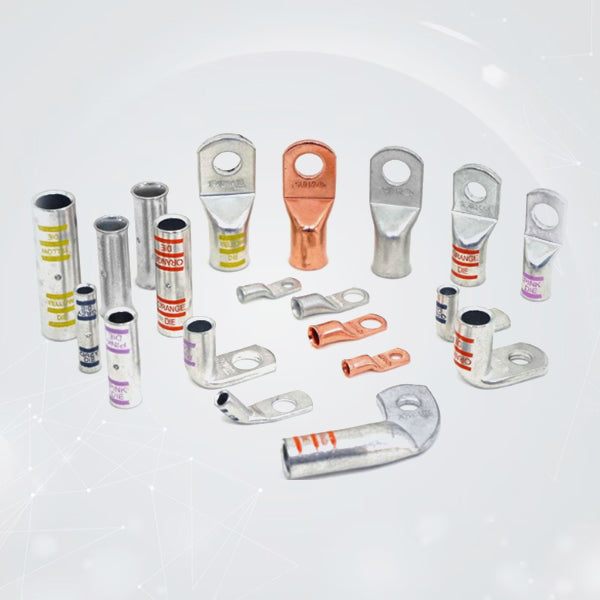


Step-by-Step: Installing 4 AWG Tinned Lugs on a Dual Battery System
Most dual battery problems don't begin with a dead battery.
They begin months earlier, when a cable lug is crimped poorly, a bargain terminal works loose, or corrosion quietly starts building where nobody thinks to look.
Everything still works, at least for a while.
The fridge keeps running. The camp lights switch on. The auxiliary battery charges during every drive. Nothing seems out of place until you lean on the system. A recovery winch starts pulling, the inverter wakes up, or the compressor runs longer than expected. Suddenly the voltage isn't where it should be.
People usually blame the battery first.
Sometimes they replace it.
The problem stays.
That's because the fault was never inside the battery. It was sitting at the end of the cable all along.
Anyone building a reliable charging system eventually learns that cable terminations deserve as much attention as the batteries themselves. A properly installed 4 awg tinned lug isn't simply there to hold a cable in place. It's responsible for carrying every bit of charging current moving through the circuit.
The Cheapest Part Can Become the Most Expensive
Spend enough time around overland builds, marine installations, or work trucks and you'll notice a pattern.
Someone invests in premium batteries.
They buy a quality DC-DC charger.
The isolator comes from a respected brand.
Then the final connection gets finished with whichever battery lug happened to be hanging on a hook at the local parts store.
It doesn't seem like a big decision.
Until it is.
The difference between a quality terminal and a bargain one often isn't visible from across the workbench. You notice it when the crimping tool comes out. A heavier barrel stays round as pressure builds. A thinner one starts folding in strange places before the crimp is even complete.
That's why installers who build systems for harsh environments rarely treat cable ends as an afterthought. Good 4 gauge tinned lugs aren't purchased because they're expensive. They're purchased because they stay tight after thousands of miles of vibration instead of becoming another problem to chase later.
Tiny Air Gaps Create Big Electrical Problems
Electrical resistance doesn't always arrive with sparks or smoke.
Most of the time it develops quietly.
A poor crimp leaves microscopic spaces between the wire strands and the inside of the barrel. They're too small to notice during installation, but large enough for moisture and oxygen to find their way inside.
The connection slowly changes.
Charging current still flows, just not as efficiently.
Heat starts building under heavy loads.
Voltage drops become a little more noticeable every season.
Eventually someone pulls out a multimeter because the auxiliary battery isn't charging the way it used to.
The cable looks fine.
The batteries test fine.
The alternator passes inspection.
Only after cutting the terminal apart does the real issue become obvious.
A properly compressed set of 4 awg tinned copper lugs avoids that scenario by creating a dense mechanical connection that leaves very little room for air, moisture, or movement.
Copper Works Hard Enough. It Doesn't Need Corrosion Helping
Lift the hood of any truck that's spent a few winters on salted roads.
Or crawl under an overland rig after a season of muddy trails.
Nothing underneath lives an easy life.
Heat cycles come and go every day.
Dust settles into every opening.
Road spray reaches places you didn't think water could reach.
Bare copper handles current extremely well, but it doesn't enjoy sitting in that environment year after year. Given enough time, oxidation starts creeping across the surface. At first it's barely noticeable. Later it becomes the familiar green discoloration that every mechanic recognizes immediately.
That layer isn't just ugly.
It gradually interferes with conductivity.
There's a reason experienced marine electricians almost automatically reach for 4 gauge tinned copper lugs when building battery cables. The tin plating acts as a protective barrier, helping the copper underneath resist the corrosion that eventually catches untreated terminals.
It's a small detail that makes a noticeable difference once the installation has been exposed to weather for a few seasons.
The Torch Method Keeps Coming Back
Every workshop seems to have someone who still solders battery lugs.
Sometimes they've been doing it that way for decades.
And yes, plenty of those cables continue working.
That doesn't mean it's the strongest approach.
Once solder melts, it has a habit of travelling farther than intended. It moves beyond the barrel and into the cable itself, stiffening strands that were designed to flex.
Vehicles never stop vibrating.
Boats never stop moving.
Trailers certainly don't.
All that movement concentrates stress at the point where the flexible cable suddenly becomes rigid.
The failure doesn't happen immediately.
Individual strands begin breaking little by little until the connection carries less current than anyone expects.
Professional installers usually avoid creating that weak point altogether. A properly executed hex crimp leaves the cable flexible while locking the conductor firmly inside the terminal.
Simple.
Reliable.
Repeatable.
A Good Installation Usually Looks Boring
Some of the best electrical work is easy to overlook.
The cable enters the barrel cleanly.
No copper strands stick out.
The heat shrink sits tight against the insulation.
Nothing twists when the retaining nut is tightened.
There's nothing flashy about it.
That's usually a good sign.
One habit worth developing is cutting back cable that's begun turning dark inside the insulation. Bright copper is worth the extra minute with a cable cutter. Starting with contaminated strands only seals corrosion inside the connection before the vehicle ever leaves the garage.
The same goes for adhesive-lined heat shrink. Plenty of people skip it because the crimp already feels solid. Months later that missing seal becomes the easiest path for moisture to enter the connection.
It's one of those jobs that's far easier to do once than to repair later.
Reliability Isn't Built One Big Component at a Time
People naturally focus on the expensive parts because they're easier to compare.
Battery capacity.
Alternator output.
Inverter size.
Those numbers look impressive on paper.
Reliable electrical systems are usually built somewhere else.
They're built on dozens of small decisions that never make the product brochure. Choosing better terminals. Using the correct crimp die. Taking an extra minute to seal every connection instead of assuming it'll be fine.
Those details rarely get attention until something quits working fifty miles from the nearest workshop.
By then, every shortcut suddenly becomes obvious.
That's why experienced builders don't think of 4 gauge tinned copper lugs as a finishing accessory. They treat them as part of the electrical system itself. A dependable connection keeps charging current moving efficiently, reduces the chance of heat buildup, and removes one more variable when the vehicle is far from home.
If you're already investing in quality batteries and heavy cable, it makes little sense to compromise on the final connection. The small decisions made during installation are often the ones that determine whether the entire system performs reliably for years or leaves you troubleshooting when you least expect it.