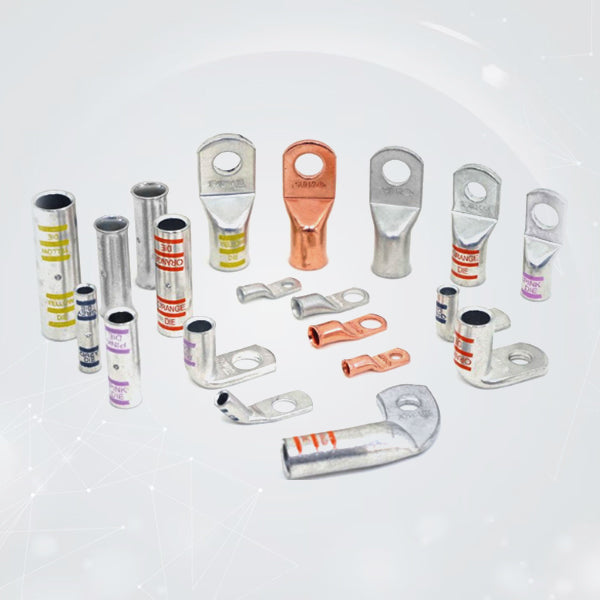


Voltage Drop and Resistance: How Quality 6 Gauge Lugs Protect Your Electrical System
A cable can be the right size and still have a bad connection at the end of it. That small difference can show up as dim lights, a slow motor, a struggling inverter, or equipment that simply doesn't perform the way it should. In many cases, the cable gets blamed first. The real problem may be sitting at the terminal. Good 6 gauge wire lugs give the cable a proper connection, helping keep resistance low and allowing the electrical system to deliver power without unnecessary losses.
The Cable Isn't Always the Problem
Voltage drop sounds more complicated than it really is.
Every electrical conductor has some resistance. As current travels through it, a small amount of voltage is lost along the way. The longer the cable and the higher the current, the more noticeable that loss can become.
Most of the time, this is taken into account when choosing the cable. What gets overlooked is everything between the cable and the equipment.
A loose terminal, poorly crimped lug, undersized connection or corroded contact can add resistance right where you don't want it.
You can have a perfectly good length of cable running from the battery to an inverter, motor, winch or distribution block. If the terminal at either end isn't making proper contact, the system can still suffer.
That's why the last inch of the cable deserves some attention too.
What Voltage Drop Looks Like in Real Life
You don't need a multimeter to notice every voltage-drop problem.
A 12V motor might sound slower than usual. Headlights may appear weaker when a heavy electrical load switches on. An inverter may shut down even though the battery still has plenty of charge.
Sometimes the symptoms are less obvious. Equipment works, but not quite as well as expected.
This is particularly relevant in low-voltage systems because even a relatively small loss represents a noticeable portion of the available voltage. A connection that adds resistance might not matter much in a small electronics circuit, but a high-current battery setup is a different story.
And there is another problem.
Resistance produces heat.
If current has to squeeze through a poor connection, that connection can become warmer under load. In a serious case, repeated heating can damage the terminal, insulation or surrounding components.
Where the Lug Comes Into the Picture
The lug is the bridge between the cable and whatever it needs to connect to.
The cable conductor goes inside the barrel. The other end of the lug sits against a stud, bolt or terminal. That sounds simple enough, but both sides have to make good contact.
A lug with the right dimensions gives the conductor enough room to sit properly inside the barrel. Once it has been crimped correctly, the connection should behave like part of the cable rather than a loose attachment hanging from it.
This is where 6 awg wire lugs become relevant for battery cables, automotive systems, RV wiring, solar installations, marine equipment and other applications using 6 AWG conductors.
The exact lug still needs to match the installation. Cable size alone doesn't tell you the required stud-hole size, orientation or terminal style.
A Bigger Lug Isn't Automatically Better
It is tempting to think that a heavier-looking terminal must be the better option.
Not necessarily.
The lug needs to match the cable. If the barrel is too large for the conductor, getting a dependable crimp becomes difficult. If the barrel is too small, the conductor won't fit properly.
The hole at the other end matters too.
A 6 gauge wire lug with the wrong stud size can leave the installer trying to make an unsuitable connection work. That's when washers, improvised modifications or poorly positioned hardware can creep into the installation.
It is much easier to get the measurements right before buying the terminal.
Check the conductor size. Check the stud diameter. Look at the available space. Then choose the lug.
The Crimp Does More Than Hold the Cable
A proper crimp isn't simply a way of stopping the cable from pulling out.
When done correctly with suitable tooling, the lug barrel is compressed around the conductor to create a strong electrical and mechanical connection. The goal is to reduce the amount of unwanted resistance at the termination.
A poor crimp can do the opposite.
The cable might look securely attached while the conductor isn't making the contact it should inside the barrel. Over time, vibration can make things worse.
This is particularly worth considering in vehicles, boats, generators and other equipment that moves or vibrates regularly.
A good crimp should be tight enough to hold the conductor securely without damaging the cable strands.
Don't Forget the Other End of the Lug
The cable-to-lug connection gets plenty of attention during installation. The flat contact surface on the other side deserves just as much.
The lug needs to sit flat against the mating terminal. Paint, dirt, corrosion, burrs or other material trapped between the surfaces can interfere with contact.
The fastening hardware also needs to be suitable and tightened correctly.
A connection can look perfectly fine from a distance while having a surprisingly small contact area underneath the nut.
For high-current wiring, that isn't something to leave to chance.
A properly installed 6 awg ring lug should sit securely on the intended stud with enough surface contact to carry the expected load. The cable should also be supported so its weight isn't constantly pulling against the terminal.
Copper Still Matters
The material of the lug is another consideration.
Copper is widely used for electrical terminals because it offers good conductivity and works well with copper cable. Bare copper is particularly common in battery and power connections where the terminal can be installed in a reasonably protected location.
That doesn't mean material choice can be separated from the environment.
A connection exposed to water, humidity, chemicals or road salt may need additional protection. In those situations, the terminal finish and the way the connection is sealed can affect how it holds up over time.
For a dry battery compartment, the requirements may be different from an exposed marine installation.
There isn't one terminal material that makes sense for every application.
The Cable Length Matters Too
Even a good terminal cannot compensate for a cable run that is too long or too small for the load.
Imagine a battery feeding an inverter several metres away. The cable has resistance along its entire length. Increase the distance or the current and the voltage loss increases with it.
That's why voltage-drop calculations are worth doing before installation, particularly for high-current or low-voltage systems.
The lug is only one part of the equation. But it is also one of the easiest parts to get wrong.
If the cable is correctly sized and the terminal is poorly crimped, the installation can still develop a weak point. If both are selected and installed properly, there is much less standing between the power source and the equipment.
When Should You Check the Connection?
You don't need to take apart every electrical connection every few weeks.
Pay attention when something changes.
If a motor suddenly seems weaker, an inverter starts cutting out, a terminal becomes hot, or you notice corrosion around a battery connection, it's worth investigating rather than assuming the equipment itself has failed.
A basic voltage measurement across the system can also tell you whether there is an unusual drop under load. Measuring at rest doesn't always reveal a connection problem. Some issues only show up when current is actually flowing.
That is one reason electrical troubleshooting can be misleading. Everything can look fine until the system is asked to do some work.
The Smallest Part Can Still Affect the Whole System
Electrical performance isn't determined by the cable alone. The terminals, crimps, fasteners and contact surfaces all become part of the same circuit once everything is connected.
A properly sized cable with a poor termination is still a poor connection.
For battery and power applications using 6 AWG cable, choosing suitable lugs is a simple step that can help avoid unnecessary resistance at the connection point. Match the terminal to the conductor and stud, use the correct crimping method, keep the contact surfaces clean, and inspect the connection if the system starts behaving differently.
A lug may only occupy a few centimetres of the entire installation, but when several hundred watts or more are passing through that connection, those few centimetres matter. Quality 6 gauge wire lugs, correctly fitted and crimped, give the electrical system a better chance of delivering the power the cable was chosen to carry in the first place.