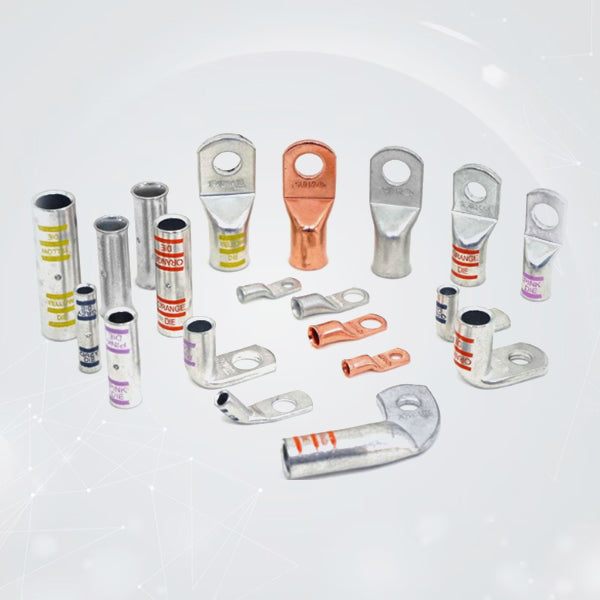


Why Marine Environments Demand Tin-Plated Copper Battery Lugs
Salt air doesn't rush, it just waits. If you maintain a saltwater center console, an overland truck traversing muddy shoreline tracks, or an off-grid tidal power setup, environmental humidity is constantly searching for any exposed electrical weak link. It finds every single unsealed connection across your DC system and turns it into a high-resistance roadblock. When building high-amp power paths—whether that is hooking up an electric trolling motor, a primary engine starter, or heavy house battery banks—the specific terminal connections you select will determine whether your setup survives the season or leaves you completely stranded on open water. While simple warehouse wiring jobs get away with standard, untreated hardware, the reality of a wet coastal environment means upgrading to specialized tin-plated copper battery lugs is a complete necessity.
For basic automotive projects or climate-controlled indoor setups, choosing run-of-the-mill terminal styles makes absolute financial sense. But once everything gets damp, those same affordable parts quickly become an active liability. Let’s break down the actual chemical mechanics behind galvanic oxidation, look at how coated connections compare to common terminal designs, and see exactly why specialized protective plating is mandatory for deep-water electrical systems.
The Silent Threat: How Atmospheric Salt Destroys Power Paths
To understand why traditional electrical parts dissolve on a boat, you have to look at what happens on a microscopic scale when bare metal encounters coastal salt spray. Copper is highly valued throughout the industry for its exceptional electrical conductivity, sitting right beneath silver as an incredibly efficient path for current. But raw copper is also highly reactive to moisture and oxygen.
In a dry, inland garage, an exposed piece of copper wire slowly develops a thin, dull brown film of copper oxide. This dark tarnish acts as a mild protective shield and won't severely degrade your system's performance as long as the mechanical clamp stays tight.
But throw in sodium chloride (salt) and nonstop humidity, and that chemical reaction shifts entirely. The airborne saltwater acts as an aggressive electrolyte, speeding up the oxidation process and breaking down the metal matrix to form copper carbonate—the classic, flaky green crust you see on neglected hardware.
Unlike the white, powdery corrosion found on standard car batteries, which usually comes from acid vapors venting out of loose fill caps, this green copper crust grows right out of the individual wire strands and the terminal barrel itself.
This crusty green accumulation is highly resistive. Instead of letting raw current glide smoothly through your connection, it acts like a kink in a garden hose, forcing your power system to struggle to push electricity through. This restriction causes two immediate headaches:
- Severe Voltage Drops: Your power-hungry accessories (like an anchor windlass or a high-draw starter) receive significantly less voltage than your battery bank is pushing out.
- Thermal Stress Risks: That choked energy doesn't simply disappear; it transforms directly into heat. Under sustained heavy loads, a deeply corroded terminal joint can easily get hot enough to deform surrounding insulation or melt plastic components.
Understanding Tin Plating as a Sacrificial Guard
The engineering answer to this environmental hazard is straightforward: insulate the underlying metal with a micro-thin layer of a completely non-reactive material. That is exactly where electroplated heavy duty lugs save the day.
Tin is uniquely qualified for this specific environment because it is remarkably stable. It refuses to react with salt air or raw oxygen the way untreated copper does. Through an industrial electroplating process, manufacturers bond a uniform, micro-thin coating of pure tin across every surface of their connector terminals.
This tin layer acts as a permanent physical shield. Because air and saltwater cannot physically make contact with the raw copper core underneath, the underlying structural integrity of your terminal stays completely intact. Even when a boat takes a beating in rough water, the tinned outer coating remains secure.
While raw tin has slightly more internal electrical resistance than pure copper, the thickness of this industrial plating is so minimal that its impact on total power delivery is completely unnoticeable. The practical payoff is an incredibly tough, low-resistance joint that preserves your current flow for years, outlasting unprotected options up to ten to one in actual marine testing.
Creeping Capillary Action: The Enemy Hidden Inside Your Insulation
One of the most annoying parts of upgrading a boat or a coastal work truck is dealing with hidden wire failure. Most builders guess that wrapping an electrical terminal in several layers of standard vinyl electrical tape keeps the wire underneath safe. Unfortunately, water doesn't just attack the outer face of a connection; it pulls itself inside.
Because marine-grade electrical cable uses hundreds of incredibly thin, braided copper strands to stay flexible under constant hull vibration, it is highly vulnerable to a physics phenomenon known as capillary action.
If moisture leaks past the outer edge of your insulation at any point along the line, the tiny spaces between those fine wire strands start acting like miniature straws, wicking water deep into the core of the cable, far out of sight.
If you rely on basic, open-backed battery connector lugs for this type of build, the hidden copper wire underneath the protective jacket will rot from the inside out. Your terminal ends at the main switch might look perfectly clean, while six inches down the wire, the core is turning into green powder.
By using high-quality cable connections that utilize a completely seamless, closed-pad end design alongside an all-over tin coating, you stop this failure loop. The solid copper nose prevents water from seeping into the barrel during a splash, while the tin finish prevents any reaction if moisture somehow creeps in from the other end of the cable run.
Bare vs. Tinned: Knowing When to Save and When to Spend
While tin-plated hardware is an absolute must for open bilges, it does carry a small price premium over raw metal options due to the extra industrial steps required to plate the parts. Understanding exactly when you can safely use standard options allows you to manage your project budget without sacrificing real-world reliability.
|
Operating Environment |
Recommended Component Style |
Primary Engineering Driver |
|
Open Bilge / Engine Bays |
Tin-Plated Copper |
Heavy exposure to standing bilge water, oil film, and salt atmosphere. |
|
Exposed Decks / Anchors |
Tin-Plated Copper |
Continuous contact with rain, salt spray, and direct washdowns. |
|
Vehicle Chassis Mounts |
Tin-Plated Copper |
High protection against winter road salt, chemical slush, and frame moisture. |
|
Cabin Interiors / RV Living Areas |
Bare Copper Lugs |
Dry, climate-controlled cabins with minimal humidity or moisture exposure. |
|
Off-Grid Inverter Rooms |
Bare Copper Lugs |
Dedicated indoor utility closets where budget efficiency matches zero moisture risk. |
If you are setting up an indoor solar battery storage wall, a home backup power station, or a multi-battery distribution setup inside the dry cabin of an RV, using high-conductivity bare copper lugs makes perfect sense. They deliver fantastic conductivity, crimp smoothly, and give you excellent value in spaces where water ingress isn't a threat.
But if your wiring project will spend its life dealing with morning dew, saltwater marshes, or unconditioned storage compartments, skipping out on tinned protection is a gamble that rarely pays off over time.
Best Practices for Constructing Pro-Grade Terminations
Even the best tinned hardware will fail if your installation technique gives water an easy way past your insulation. Building a watertight, marine-grade cable assembly requires a deliberate step-by-step process:
- Clean, Square Cuts: Cut your heavy cable using dedicated, curved jaw cable cutters. Avoid hacksaws or standard flat wire cutters, which crush and scatter the fine inner wire strands, making it tough to slide the wire cleanly into the terminal barrel.
- Match the Barrel Size: Ensure your wire gauge matches your terminal size exactly. If you are running 2/0 AWG marine wire, you need a 2/0 AWG lug. Trimming down individual wire strands to force a large cable into a undersized barrel creates an immediate, dangerous hot spot.
- Use a Heavy Hex Crimp: Stay away from using a hammer, punch, or bench vise to flatten your terminals. A professional hex crimping tool applies equal compression from every side, cold-welding the copper wire and the tinned barrel into one single piece of solid metal without leaving tiny air gaps where moisture can hide.
- Install Adhesive-Lined Heat Shrink: Slide a section of dual-wall, marine-grade heat shrink tubing onto the wire before making your crimp. Once crimped, slide the tubing up so it covers the entire barrel and extends at least an inch onto the wire insulation. Apply heat evenly until the internal glue squeezes out the edges, creating a permanent, watertight seal.
Securing Long-Term Electrical Reliability
Protecting the foundation of your DC power grid is what keeps your critical gear operational when conditions turn rough. Taking those few extra minutes to check your operating environment, match your cable sizing accurately, and invest in corrosion-resistant plating ensures your system won't struggle with high-resistance power drops down the road.
Whether you are rebuilding a commercial work vehicle or hunting down the best bare copper lugs for an indoor solar power closet, using commercial-grade installation gear protects your hardware investment. Don't let cheap terminal choices kill your electrical output—head over to the Selterm Core Product Catalog to secure the heavy-duty, field-tested connecting hardware built to carry your exact power load without breaking a sweat.