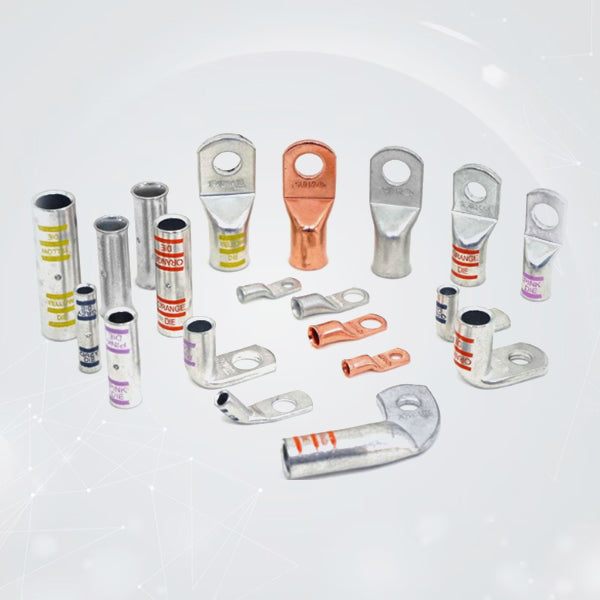


Why Tinned Copper Lugs are Mandatory for Marine and Offshore Electrical Systems
Saltwater ruins boat wiring. Throw a standard automotive power terminal into a wet bilge or expose it to open ocean air, and the metal corrodes before the season even gets rolling.
Raw cable ends take immediate, irreversible damage from high humidity and aggressive salt spray on an open deck, a commercial fishing vessel, or a coastal dock setup.
Standard unplated terminals cannot maintain clean power delivery out on open water. The environment is simply too hostile. High-voltage lines running to bilge pumps, starters, and marine electronics need an absolute metal bridge that handles full current without dropping voltage.
That is why tinned copper lugs are completely non-negotiable for marine wiring.
A weak junction on the water creates a massive safety hazard. Salt crust forms inside open connections, electrical resistance climbs, and voltage drops fast. The joint can easily become hot enough to melt rubber insulation jackets or spark an electrical fire out at sea where there is nowhere to run. When managing heavy power loads on open water, premium tinned copper lug engineering serves as the primary defense against total electrical failure when miles from the shore.
Why Raw Battery Lugs Copper Terminals Fail At Sea
Look at the standard electrical connectors found in automotive shops. Plenty of raw, unplated options work perfectly fine on a dry workshop workbench, but they become an absolute liability the second they hit a boat.
Exposing bare battery lugs copper surfaces to salt air triggers a rapid chemical reaction. Oxygen, moisture, and saltwater spray combine to form copper carbonate, commonly known in the yard as green rot. This powdery green crust doesn't just sit on the outside of the pad—it actively creeps deep inside the terminal barrel, rotting the wire strands from the inside out and destroying the physical connection.
Marine engine rooms and open boat decks are brutal on electrical gear. High vibrations from rough waves mix with pounding water and constant dampness.
Uncoated copper degrades immediately under these conditions. When the contact point between the pad and the busbar oxidizes, electrical resistance spikes. This bottleneck starves critical electronics of voltage, forcing the charging system to work twice as hard until the starter solenoids fail and batteries die completely in the middle of a trip.
Why Tin Plating Actually Works
- To keep a marine power network from rotting, the underlying metal needs an absolute physical barrier. Industrial marine terminals rely on thick-wall C11000 electrolytic copper that gets standard electro-tinned.
- Tin completely ignores the corrosive effects of salt spray, high humidity, and engine room acids. A micro-thin layer of pure tin completely wraps the raw copper core to seal it off from the elements. This plating keeps the inner copper fully isolated so it retains its raw conductivity without ever contacting the salt air.
- Using high-grade tinned battery lugs prevents galvanic corrosion. When raw copper contacts a stainless steel bolt or an aluminum boat hull in a damp bilge, a tiny electrical current flows between the different metals. This current acts like a battery, eating away the weaker material until the joint fails. Tin acts as a neutral buffer, stopping this metal-on-metal destruction completely.
- Better yet, tin preserves the softness of the terminal. Pure copper is naturally workable. The electroplated tin layer is just as flexible. Because the metals match, the barrel deforms perfectly under thousands of pounds of pressure from a hex tool without cracking, flaking, or peeling away from the base core.
The Danger of Soldering Marine Battery Cable Ends
An old-school dockside repair trick that ruins marine wiring networks is using a propane torch and solder to secure heavy cable connectors. Solder creates a clean-looking joint initially, but professional marine electrical standards ban the process for good reason.
As heat melts the solder into the terminal barrel, capillary action draws the liquid metal straight up the flexible stranded wire past the lug entry. Once cooled, the solder hardens, turning a flexible marine cable into a stiff, solid metal rod.
Boats bash against waves and experience constant hull vibration. All that mechanical stress concentrates directly at the exact spot where the flexible wire insulation meets that rock-hard, soldered section. Over time, individual copper wire strands suffer from metal fatigue and snap clean off right at the back of the terminal barrel.
The industry standard for ocean compliance is a gas-tight mechanical crimp. Forcing the tinned barrel to compress uniformly from six sides cold-welds the wire strands directly to the inner walls, sealing out all air so interior salt rot cannot start.
4 Steps for a Secure Crimp
First, clean the strands completely. Never crimp over dark, tarnished wire. Cut old cables back to fresh, bright copper. Scrub dull wire with a stainless brush until it shines before inserting it into the barrel.
Second, verify the seating depth. Strip the jacket to match the exact length of the lug barrel. Push the wire in until strands show in the inspection window. Keep the insulation gap under 1/16 of an inch.
Third, use a proper hex crimper. Avoid cheap hammer tools that deform the metal. Use a manual or hydraulic hex tool to crush the barrel evenly. This forces out all air and fuses the metals.
Fourth, seal the joint completely. Slide heavy-wall, adhesive-lined 3:1 heat shrink over the connection. Heat it until the internal glue squirts out the edges to form a waterproof barrier against sea spray and bilge water.
Real-World Consequences of Copper Oxidation
Ignore these steps, and the cost shows up during troubleshooting. When raw copper corrodes inside a terminal barrel, the structural loss is invisible from the outside. A boat owner might turn the ignition key and hear nothing but a dead click, assuming the starter battery is completely shot.
In reality, the battery might be fully charged, but the power cannot pass through the green crust trapped inside the unplated connector barrel.
This resistance hidden inside the connection behaves like a closed valve on a water pipe. The current struggles to jump the gap between the oxidized copper wire strands and the unplated terminal wall. This resistance transforms electrical energy directly into intense thermal energy.
High-amp draws change the game. Running a heavy anchor windlass or cranking a cold diesel engine forces massive current through the line. If that current hits an unplated, oxidized barrel, the temperature jumps instantly.
This localized heat build-up will liquefy standard electrical tape in seconds. Nearby plastic fuse blocks will warp and deform from the thermal spike. In a tight, enclosed engine compartment, that extreme heat creates a direct fire hazard.
Maintenance Protocols for Coastal Power Systems
Preventative care is the only thing keeping an offshore electrical system online. Every connection point below the deck needs a physical inspection at least once a season. Do not just look at it from a distance. Get in there and check for any lifting around the heat shrink edges or dull graying on the metal surfaces.
Slapping a thin layer of marine-grade dielectric paste or anti-corrosion spray over the bolted connection creates a great secondary boundary against salt air.
If a terminal has to come off for an equipment upgrade, clean the pad faces down to the bright tin layer with a clean rag and some isopropyl alcohol.
- Ditch the sandpaper. Do not touch a tinned terminal pad with a coarse metal file or heavy emery cloth. Scraping the surface destroys that thin protective tin layer instantly. Once the raw copper underneath is exposed, salt air hits it, and green rot takes over the whole connection.
- Scrap the worn hardware. If the tin coating looks visibly gouged, flaked off, or shows raw red copper bleeding through the surface, throw it away. Reusing a compromised terminal is a bad idea. Cut the cable back to clean strands and crimp on a fresh piece of hardware instead.
Built for Offshore Use
An electrical system is only as good as its weakest link. Cutting corners on basic wire ends causes sudden power losses on open water.
The heavy-duty choices in the Selterm Tinned Copper Collection use seamless copper tubes with thick, flat pads to accept full crimping forces without splitting.
Upgrading to premium tinned copper lug eliminates resistance build-up and structural rot, keeping the power network running safely for years. Combining high-purity copper metallurgy with heavy electro-tinned plating and a tight adhesive heat shrink seal provides a cool-running, highly efficient offshore power network that operates reliably across decades of heavy sea service.