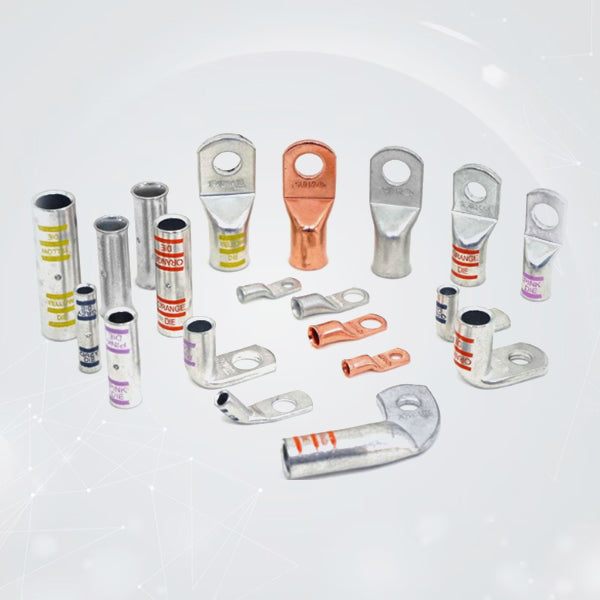


8 AWG Copper Lugs for Harsh Environments: Corrosion Resistance and Durability
When you install an electrical system in a clean, dry room, standard hardware usually holds up just fine. The air stays stable, the temperature stays steady and there is little external stress on the components.
But put your wiring outdoors, and the rules change.
Think about engine bays, rooftop solar enclosures, heavy construction equipment and marine docks. These are harsh places for electrical joints. Wiring here faces constant moisture, wide temperature swings, chemical exposure and relentless vibration.
If you are running a mid‑range system on 8 awg copper wire, you cannot cut corners on the connectors. Using high‑grade 8 AWG copper lugs, including 8 AWG ring lugs and 8 gauge battery lugs, is a practical way to keep power flowing and stop the system from overheating.
The Real Enemies: Corrosion, Heat, and Vibration
In tough environments, electrical joints fail from the inside before anything looks wrong on the outside. When current flows through a conductor, any weak spot increases resistance. More resistance means more heat. In the field, that heat builds up quickly because of three main problems.
1. Oxidation and chemical corrosion
Copper naturally reacts with oxygen and moisture to form a dull copper oxide layer. Add salt spray, road grime or industrial fumes and the process speeds up.
This green or black corrosion acts like a thin insulator. As resistance grows at the terminal, the joint runs hotter. That extra heat pulls down your voltage, weakens performance and can melt nearby insulation or plastic parts.
2. Extreme temperature swings
Outdoor equipment bakes in the sun and then cools quickly at night. The metal also heats up when you draw heavy current and cools again when the load drops.
This constant expansion and contraction makes different metals move at different rates. If a terminal has thin walls or weak construction, these cycles can twist the barrel and loosen the grip on the wire over time.
3. Constant vibration
Vehicles, boats and wind‑exposed solar racks do not stay still. They shake, rattle and bounce. In a cheap or poorly made 8 AWG wire lug, all that mechanical stress concentrates where the bare strands leave the lug barrel.
Without a solid, uniform bond, individual strands fatigue and break. That effectively reduces your wire size and creates a hotspot that can kill a connection.
Material Purity: Why Cheap Alloys Don’t Last
To survive these stresses, the base metal of the connector must be high quality. Many budget terminals look fine on the shelf but are made from low‑grade brass or cheap alloys with only a thin copper coating.
Purpose‑built 8 AWG copper lugs, including 8 AWG ring lugs, are made from seamless C11000 electrolytic copper. This grade offers the highest electrical and thermal conductivity.
Pure C11000 copper is soft and malleable. Under proper crimp pressure, it flows evenly around the wire strands without cracking. That forms a dense, solid block of metal with no internal air pockets for moisture to hide in.
Bare Copper vs. Tin Plating
When you choose 8 awg copper lugs, you usually pick between bare copper and tinned copper finishes. Each has a clear role depending on the environment.
Bare copper lugs
Bare copper gives the lowest contact resistance out of the box. For dry industrial panels, sealed enclosures or heavy‑duty automotive starters in dry climates, 8 gauge battery lugs work very well.
If you add a quality dielectric grease or conductive paste to the connection, bare copper can handle normal humidity while keeping power transfer close to maximum.
Tin‑plated copper lugs
For marine use, coastal solar systems and exposed industrial sites, 8 AWG tinned lugs and 8 Gauge Tinned Copper Lugs are the better choice.
A thin, uniform layer of tin covers the pure copper core. Tin resists salt and acid corrosion, which keeps the underlying copper clean for years. That means lower long‑term resistance and a more reliable connection in wet, salty or polluted environments.
The Crimp: Building a Solid, Gas‑Tight Seal
Even the best 8 AWG wire lugs only perform if they are installed correctly. In harsh conditions, soldered joints and poor crimps will fail early.
Soldering creates a stiff, brittle section where the solder soaks up into the wire strands. Under vibration, that section is more likely to break. Standard pliers or hitting the lug with a hammer only mash the metal unevenly, leaving gaps inside the barrel that trap moisture and speed up corrosion.
For tough environments, a proper hexagonal crimp is the proven method. A ratcheting or hydraulic tool presses the lug barrel from six sides at once. The pressure is high enough to cold‑weld the copper strands directly to the lug metal.
As the air is forced out, the joint becomes a solid, gas‑tight block. Internal corrosion cannot start, and the connection stays cool and stable under heavy loads.
Four Steps to a Reliable Connection
To make sure an 8 gauge battery lug survives the elements, follow this simple sequence.
-
Cut clean and straight
Use a proper cable cutter to make a straight cut on the 8 AWG copper wire. If the strands look dull or dark, lightly brush or polish them until they are bright and clean. -
Check the depth
Strip the insulation to match the lug barrel length. Push the wire in until strands show through the inspection window. Aim for less than 1/16 inch between the insulation and the back of the lug. -
Double‑crimp for a full seal
Place the hex die in the center of the barrel and make the first crimp. Then rotate the lug slightly and crimp a second time. This ensures even deformation and a complete, void‑free connection. -
Seal with adhesive heat shrink
Slide a heavy‑wall, 3:1 ratio heat‑shrink tube over the completed joint. When heated, the internal glue melts and flows into every gap around the wire and lug barrel. That seals the connection from water, dust and chemicals.
Proven Reliability in Harsh Environments
The performance of your power system depends on the weakest terminal. In long‑life field designs, engineers focus on materials that are traceable and consistent in wall thickness.
The 8 gauge battery lugs and 8 AWG wire lugs from Selterm are built for this level of reliability. These include 8 AWG ring lugs in the bare copper range, as well as 8 AWG tinned lugs and 8 Gauge Tinned Copper Lugs for marine and coastal applications.
Made from seamless copper tubes, these lugs have precision‑machined pads and uniform barrels that accept heavy crimping loads without cracking.
By combining high‑purity copper, the right hex crimping tools and adhesive heat‑shrink tubing, you remove most of the environmental risk. The result is a cooler, more efficient system that keeps your batteries protected even in the harshest conditions.