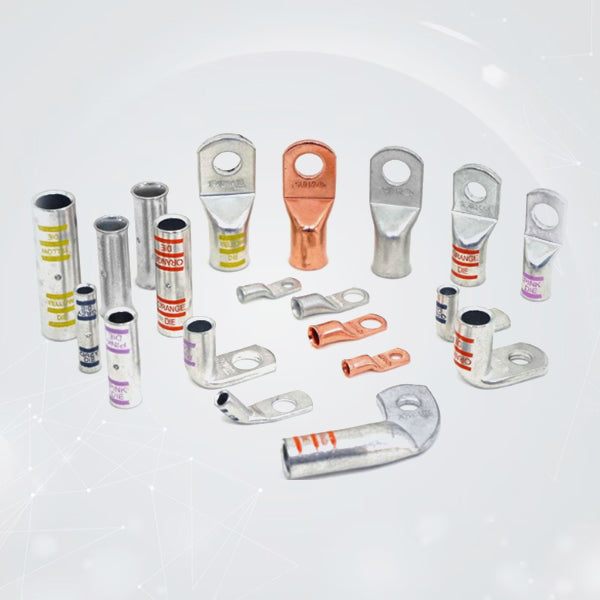


Bare Copper Lugs for Indoor Electrical Systems: A Practical Guide
When you are designing an electrical system for a controlled, indoor environment, you have a unique advantage. Unlike marine or off-road enthusiasts, you aren’t fighting a constant battle against salt spray or road grime. This allows you to focus on the one thing that matters most for your power delivery: pure, unadulterated conductivity.
For indoor battery banks, server rooms, or home power backups, bare copper lugs are the gold standard. They represent the shortest, cleanest path for electricity to travel. While they might seem like simple pieces of hardware, choosing the right ones is the difference between a system that runs efficiently and one that wastes energy as heat.
Why Bare Copper is the Purist’s Choice
In many electrical projects, we see "tinned" lugs used to prevent corrosion. However, in a dry, indoor setting, that extra layer of tin is often unnecessary. Using battery copper lugs in their raw, bare state offers the highest possible electrical conductivity.
Copper is the benchmark for power transfer. By using bare copper lugs made from 99.9% pure C11000 electrolytic copper, you are ensuring that your connection points have the same high-performance characteristics as the high-quality cable they are attached to. There is no plating to act as a barrier, just a direct metal-to-metal bond that keeps resistance at an absolute minimum.
Where Indoor Systems Need Heavy-Duty Support
Just because a system is indoors doesn't mean it isn't working hard. High-draw applications require heavy duty battery lugs that can handle sustained current without flinching.
- Solar Storage Arrays: If you have a rack of lithium batteries in a garage or utility room, they are likely pushing 50 to 100 amps through your inverter.
- Uninterruptible Power Supplies (UPS): Data centers and home offices rely on quick transitions to battery power. In these moments, every millivolt counts.
- Audio Power Walls: For high-end home theater or studio setups, enthusiasts prefer copper battery lugs because they provide the cleanest signal path with the lowest noise floor.
The Anatomy of a High-Quality Lug
When you are looking at options on the Selterm bare copper collection, you will notice a few design features that separate a professional-grade lug from a generic one.
The Seamless Barrel
A high-quality lug is often made from a single piece of copper tube. This seamless construction means there is no weak point that could split during the crimping process. When you apply 10 tons of pressure with a crimping tool, you want that copper to flow and deform uniformly around your wire strands.
Precision Sizing
Generic lugs often have "loose" tolerances, meaning a 4 AWG wire might feel wobbly inside the barrel. Professional bare copper lugs are machined to tight tolerances. A snug fit before you even start the crimp ensures that you get 360-degree contact once the connection is finished.
The Inspection Hole
It is a small detail that makes a massive difference. An inspection hole allows you to visually confirm that your cable is fully seated in the lug. In the world of high-current power, "close enough" is never good enough.
Maximizing Performance: The Crimp and the Seal
To get the most out of your copper battery lugs, the installation process needs to be as precise as the hardware itself.
- Clean Your Leads: Even in indoor environments, wire can develop a fine layer of oxidation. A quick wipe or a light brush ensures the best contact.
- The Gas-Tight Crimp: Use a hex-style crimping tool. This compresses the lug and wire into a solid hexagonal shape, removing all air gaps. This "cold weld" is what gives heavy duty battery lugs their incredible reliability.
- To Seal or Not to Seal? Even though these are indoor lugs, many professionals still use heat shrink tubing. It provides a finished look and adds a layer of strain relief to the cable, preventing the wire from flexing at the point where it meets the lug.
Comparing the Options: Bare vs. Tinned for Indoors
| Feature | Bare Copper Lugs | Tinned Copper Lugs |
| Conductivity | Absolute Maximum | Very High (99%+) |
| Corrosion Resistance | Moderate (Best for dry areas) | High (Best for humidity) |
| Cost-Effectiveness | Excellent | Slightly Higher |
| Best Use Case | Indoor Solar, UPS, Audio | Marine, RV, Outdoor |
For a standard indoor project, the cost savings of bulk bare copper lugs add up quickly without sacrificing any real-world performance. Unless your "indoor" location is a high-humidity basement or a laundry room with frequent steam, bare copper is the smarter, more efficient choice.
Investing in Efficiency
Every electrical system is an investment in reliability. Whether you are building a backup for your home or a power solution for a client, the small components matter. Using copper battery lugs that are designed to meet industrial standards ensures that your system doesn't just work, it excels.
By minimizing resistance and maximizing the physical integrity of your connections, you are protecting your batteries and your equipment for the long haul.