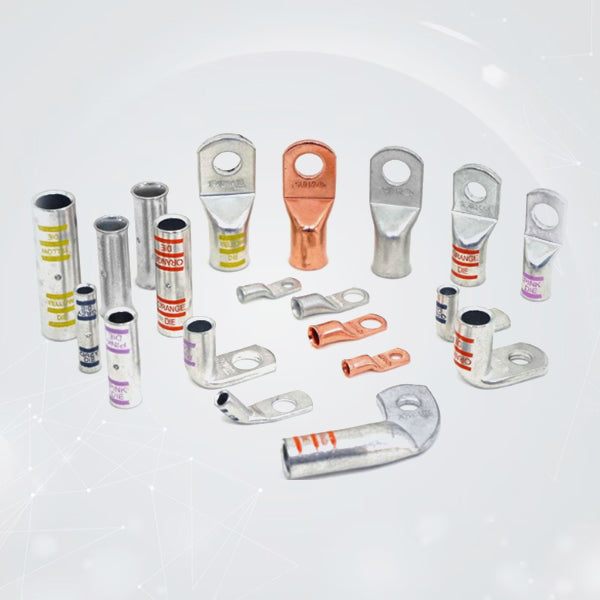


Heavy Duty Bare Copper Lugs – High Conductivity Battery Terminals
When you’re working with high‑power systems, even small parts matter. Battery lugs are a great example. They look simple, but get the wrong kind, and you can end up with voltage drops, overheating, or even system failure.
That’s why professionals in automotive, industrial power, and renewable energy setups prefer heavy duty battery lugs. These aren’t your basic connectors. They’re built to handle high current, constant load, and tough conditions without failing.
For solid, reliable connections, copper battery lugs – especially bare copper lugs – are the smart choice.
What Are Bare Copper Lugs?
Bare copper lugs are connectors that join battery cables to terminals, studs, or bus bars. They’re made from pure copper, with no coating or plating on top.
Because there’s no tin or other layer, the copper makes direct contact with the terminal. That means less resistance, better current flow, and less power lost as heat. That’s why bare copper battery cable ends are so common in solar, inverters, EVs, and heavy‑duty systems.
Why Bare Copper Works Better
Copper is one of the best conductors we have. For battery cable ends, bare copper does better than plated options because it gives:
Very high conductivity
- Lower resistance at the connection
- Better current flow
- Less voltage drop
- Good heat dissipation under heavy loads
Pure copper also holds up well mechanically when crimped right. It doesn’t crack easily and can handle vibration from engines, machines, and vehicles.
So if you want a reliable lug, bare copper lugs are the way to go.
What Makes Heavy Duty Battery Lugs Different?
Standard lugs might be okay for light loads, but they can overheat, loosen, or fail under real‑world stress. Heavy duty battery lugs are built differently.
They have thicker copper walls and stronger barrels, so they can handle:
- High amperage over long periods
- Continuous power without breaking down
- Vibration from engines and moving equipment
- Heat from electrical resistance
These heavy duty lugs are what you want in automotive, industrial, and renewable energy setups where you can’t afford weak connections.
Benefits of Copper Battery Lugs in High‑Current Systems
Strong conductivity and efficiency
Copper battery lugs help power move with less loss. Less wasted energy, cooler operation, better system performance.
Secure, long‑lasting connections
Copper is malleable, so it can be crimped tightly and evenly. That gives a solid joint that resists loosening over time. Good crimps also help prevent internal corrosion, keeping the connection strong for years.
Better heat management
High‑current connections get hot. Bare copper spreads that heat well, so it doesn’t stay in one spot. That reduces the risk of overheating and protects both the cable and the equipment.
Where Bare Copper Battery Cable Ends Are Used
These lugs are common in places where you need reliable, high‑current connections:
- Automotive and commercial vehicle battery systems
- Solar power installations and battery banks
- Industrial machinery and power distribution panels
- Marine and off‑grid power setups
- Backup power and energy storage systems
In all these cases, you need a solid connection that can handle high current and keep working.
How to Choose the Right Bare Copper Lugs
Picking the wrong lug can cause problems. If it’s too small, it can overheat. If it’s too big, the crimp won’t be tight. To choose the right lug:
- Match the cable gauge to the lug barrel
- Check the stud hole size (1/4", 5/16", 3/8", 1/2")
- Look at barrel length for full cable contact
- Consider wall thickness for your current load
- Think about your environment (heat, moisture, vibration)
For example, if you’re using 4 AWG cable, pick a lug meant for 4 AWG, with the right stud size. That’s what gives you a safe, long‑lasting connection.
Installing Heavy Duty Battery Lugs – Simple Tips
Even a good lug can fail if it’s not installed right. Basic tips:
- Use the right crimping tool for copper battery lugs
- Make sure all cable strands are fully inside the barrel
- Apply even pressure for a tight, solid crimp
- Use heat shrink or insulation to protect the connection
- Check connections regularly in high‑vibration spots
A good crimp is gas‑tight and strong. If the lug is loose or the cable is only half in, that’s a problem waiting to happen.
Why Selterm Bare Copper Lugs Are a Trusted Choice
Selterm makes heavy duty battery lugs from pure annealed copper. That means high conductivity and consistent quality. These copper battery lugs are designed to:
- Handle high current loads reliably
- Give strong, durable cable terminations
- Work well in automotive, industrial, and renewable energy systems
- Stay safe and efficient over time
They’re available in a range of sizes, so you can find the right bare copper battery cable ends for most battery and power applications.
Final Thoughts
Good electrical systems need good connections. Heavy duty battery lugs and bare copper lugs help deliver power efficiently, reduce voltage drop, and keep everything running smoothly. With high conductivity, good heat handling, and solid mechanical strength, bare copper lugs are what professionals trust.
Whether it’s for automotive, solar, industrial, or marine use, quality copper battery lugs are an investment in performance, safety, and reliability. When you need bare copper battery cable ends that actually work, heavy duty bare copper is the standard most people stick with.