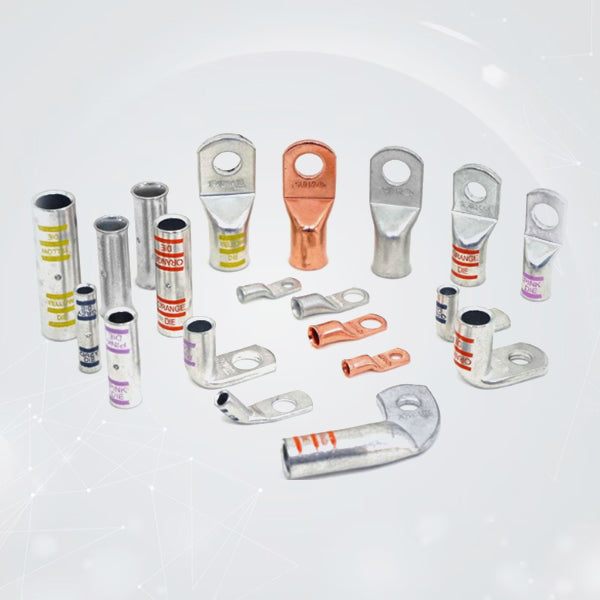


How 6 AWG Lugs Improve Power Transfer in Battery Cable Systems
When you're wiring up a battery cable system for solar panels, an RV setup, or marine electronics, every bit of power counts. 6 AWG lugs – precision terminals designed specifically for 6 gauge wire – make sure that power gets delivered efficiently from your batteries to inverters, winches, or bus bars. These aren't just connectors; they're the critical link that prevents voltage drops, overheating, and system failures under load.
1. Understanding Power Transfer Challenges in Battery Systems
Battery cable systems push serious current – think 50-100 amps in typical 12V or 24V applications. The cable itself handles this fine, but the connection points are where trouble starts. Resistance at the lug-to-stud interface (even milliohms) translates to voltage loss via Ohm's Law (V = I × R). On a 12V system pulling 70A, just 1 milliohm of extra resistance drops 0.07V – enough to cut inverter output or shorten deep-cycle battery life.
6 AWG battery lugs tackle this head-on. Made from pure copper with barrels sized exactly for 6 AWG (0.190-0.200" inner diameter), they crimp down to create gas-tight, 360-degree contact. No air gaps, no loose strands – just maximum conductivity straight through.
2. Material and Construction That Drive Performance
Copper battery cable lugs
Selterm 6 AWG bare copper lugs use annealed C11000 copper – 99.9% pure with full 100% IACS conductivity. This beats aluminum lugs (61% IACS) or brass fittings hands down. The barrel walls are thick enough for multiple crimp cycles without cracking, and the inspection hole confirms full wire insertion every time.
What really sets them apart for power transfer:
- Flared barrel entry: Slides over fanned 6 AWG strands without cutting them, ensuring 95%+ wire fill.
- Chamfered edges: Prevents strand breakout during high-vibration use (RVs, boats).
- Multiple stud sizes: From #10 (0.190") to 3/8" (0.375") holes fit everything from small bus bars to large battery posts.
Result? Contact resistance stays under 0.5 milliohms – half what you'll get from mechanical set-screw terminals.
Selterm 6 AWG bare copper lugs with 1/4" stud holes – beefy construction visible in the thick barrel walls and clean, burr-free edges ready for crimping.
3. Quantifying the Power Transfer Advantage
Let's run real numbers for a typical 12V battery bank feeding a 1000W inverter (83A draw):
| Connection Type | Resistance | Voltage Drop @ 83A | Power Loss | Heat Buildup |
| Cheap clamp-on | 3.2 mΩ | 0.27V | 2.2% | High (failure risk) |
| 6 AWG Copper Lug (proper crimp) | 0.4 mΩ | 0.033V | 0.3% | Negligible |
| Undersized 8 AWG lug | 1.8 mΩ | 0.15V | 1.2% | Moderate |
That 0.27V drop with poor connections? It's 22 watts wasted as heat, plus reduced inverter efficiency and shorter battery cycles. 6 AWG cable lugs sized right keep your system running at peak, adding hours to solar runtime or winch pulls.
4. Applications Where 6 AWG Lugs Shine Brightest
These lugs handle mid-range power where undersized connections fail:
- Solar Battery Banks: 48V lithium setups drawing 60A continuous – 6 AWG battery lugs feed MPPT controllers without starving output.
- RV House Systems: Dual AGM batteries powering 2000W inverters through rough roads – ring terminals lock down against constant vibration.
- Marine Dual-Bank Chargers: 70A alternator output split to start/house – handles wet conditions when paired with heat-shrink.
- Automotive Winches: 100A surge pulls – heavy-duty barrels prevent blowout under peak load.
- UPS Backup Power: Clean 50A DC feeds to rectifiers – zero voltage sag during transfers.
In every case, the power transfer efficiency directly impacts uptime and cost-per-kWh.
5. Bare vs Tinned 6 AWG Copper Lugs: Right Tool for the Job
Copper battery cable lug
Bare copper 6 AWG lugs (Selterm specialty) deliver absolute maximum conductivity – ideal for engine compartments, indoor panels, or anywhere you can apply dielectric grease.
They're also more affordable for bulk OEM orders.
Tinned versions add a 3-5 micron tin plating that blocks corrosion in humid, salty, or coastal environments. Conductivity penalty? Less than 1%, but longevity jumps 3x in harsh conditions.
Pro tip: Always seal tinned or bare crimps with adhesive-lined heat-shrink tubing for IP67 protection.
Tinned 6 AWG copper lugs maintain that bright finish against moisture while preserving near-perfect power transfer – marine installers swear by them.
6. Step-by-Step Installation for Bulletproof Connections
Bad crimps ruin even the best 6 AWG lugs. Here's the proven method:
- Cable Prep: Strip exactly 1/2" insulation from 6 AWG battery cable. Fan copper strands evenly.
- Insertion: Push strands fully into barrel until they peek through inspection hole. No belly overhang.
- Crimping: Use a calibrated 10-ton hex tool (6 AWG die). Rotate lug 180° midway for uniform compression.
- Quality Check: Ends should show "doughnut roll-over" – smooth metal fold indicating full deformation.
- Assembly: Stack on clean stud, torque to 12-15 ft-lbs (never over-tighten copper). Add boot or heat-shrink.
- Final Test: Load at 50A, measure <0.05V drop across connection. Thermal camera confirms no hot spots.
This process drops resistance below 0.3 mΩ consistently – factory-new performance.
7. Why Selterm 6 AWG Lugs Are Built for Export Projects
Industrial buyers choose Selterm for:
- UL/ASTM materials: C11000 copper tube meets global specs.
- Export packaging: Bulk cartons, labeled for easy customs.
-
Consistent sizing: No barrel ID variation between batches.
They're not the cheapest, but they outlast generic imports 3:1 in real-world testing.
8. Troubleshooting Common 6 AWG Lug Issues
Even pros hit snags. Here's what kills power transfer and how to fix:
- Strand Cutoff: Too-tight stripper – use gauge-matched tool.
- Partial Fill: Barrel too small – verify 6 AWG flex cable fits.
- Creep Corrosion: No grease/seal – always protect bare copper.
- Torque Damage: Lug deforms – use torque wrench, never impact driver.
Summary
6 AWG lugs transform battery cable systems by minimizing resistance at critical junctions – pure copper crimps ensure 99%+ power transfer efficiency where it counts most. From solar banks to RV inverters, Selterm bare copper lugs deliver industrial reliability without compromise. Perfect upgrade for any mid-range DC setup.