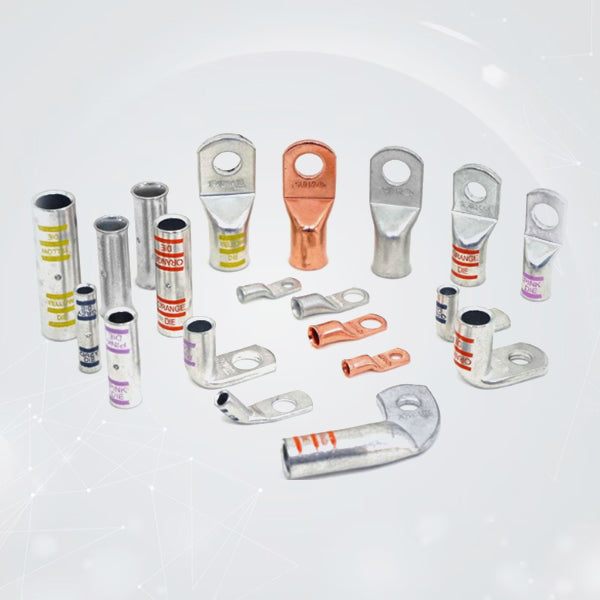


How 90 Degree Battery Lugs Improve Cable Routing and Connection Safety
Anyone who has wrestled thick 2/0 gauge wire into a tight battery box knows the frustration. You force the stiff copper cable around a sharp corner just to reach the terminal stud. The cable resists every inch. The result is a connection under constant strain. The battery box lid barely closes, if at all.
This is where 90 degree battery lugs come in. They solve the problem by building the bend right into the connector. Battery terminal 90 degree designs let the cable run straight and relaxed, with no forced twists. These 90 degree battery cable ends turn a headache into a clean, reliable setup.
The Physics of Tension and Why It Matters
Forcing a straight lug through a tight 90-degree turn creates more than a messy look. It turns the cable into a mechanical spring that pulls constantly on the battery post or bus bar.
Thicker gauges like 4 AWG, 2 AWG, or 1/0 become rigid. Manual bends cause spring-back tension. This force does not disappear when you tighten the nut. It lingers, stressing the entire connection.
Here is what goes wrong:
-
Loosening Over Time
Vibrations from engines or rough roads combine with the pull. They back off terminal nuts gradually. A loose nut builds resistance and heat. In high-amp systems, that heat melts plastic housings fast. -
Damage to Battery Internals
Lithium batteries like LiFePO4 have fixed terminals tied to internal bus bars. Prying force from straight lugs stresses seals or cracks the case. Repairs get expensive quickly. -
Strand Fatigue in the Cable
Sharp bends stretch outer strands thin while compressing inner ones. Micro-fractures form over time. Strands snap. This effectively thins your cable's gauge and cuts capacity.
90 degree battery cable lugs fix this right away. The cable stays straight. Strands stay even. The pad sits flush. Stress-free connections hold tight for the long haul.
Reclaim Space in Tight Builds
Modern setups cram batteries, bus bars, and inverters into compact spaces. Think van conversions, marine consoles, or solar sheds. Every inch counts.
90 degree battery cable ends save room and simplify routing. Cables drop straight down or turn sideways without loops or bulges.
Battery Boxes and Enclosures
Plastic battery boxes have low lids. Straight lugs with thick cables poke up too high. You end up cutting the lid or leaving it ajar. Both options harm safety. A battery terminal 90 degree setup keeps the profile low. The lid closes tight. Terminals stay protected from shorts.
Inverters and Chargers
Recessed inverter terminals hide behind plates. Straight lugs make cable entry awkward and stressful. 90 degree battery lugs let cables exit cleanly. They apply no pressure on internal mounts.
Dual Battery Links
Linking batteries in a tight tray leaves no room for long bridges. 90 degree battery cable lugs enable short, efficient jumps. Shorter runs mean less resistance and voltage drop.
Built for Performance: The Construction Edge
Quality 90 degree battery cable ends start with pure C11000 electrolytic copper. Factory tools form them with precision. They avoid the brittleness of hand-bent knockoffs.
Copper work-hardens with rough bending. Factory bends keep full wall thickness through the curve. Benefits include:
- Uninterrupted Conductivity: No thin spots to bottleneck current.
- Solid Structure: Round barrels and flat pads crimp perfectly for a cold-weld seal.
- Tight Fit: Consistent diameters ensure gas-tight crimps with no air gaps. Browse the
Bare or Tinned: Match Your Environment
90 degree battery cable lugs come in bare and tinned options, just like straight ones.
Bare Copper 90s
These provide top conductivity at a budget price. They work best in dry, controlled spots like indoor solar closets or server backups.
Tinned Copper 90s
Tin plating blocks oxidation and green corrosion. Choose these for boats, RVs, or outdoor boxes. In hidden tight spots, tin prevents trouble you might not spot until failure.
Pro Checklist for Perfect 90-Degree Installs
Angled lugs demand careful prep. Once crimped on heavy cable, adjustments prove tough. Follow these steps:
-
Clock the Orientation
Dry-fit the 90 degree battery lug on the stud with cable inserted. Rotate until the bend points right. Mark the barrel and insulation with a Sharpie. Align marks during crimping for perfect routing. -
Pick the Right Crimper
Skip hammer styles, which slip on bends. Hydraulic hex or long-handle mechanical crimpers ensure even compression from all sides. -
Seal with Adhesive Heat Shrink
Use 3:1 glue-lined shrink tubing. It insulates against nearby metal and seals out moisture. Glue flows into gaps to stop wicking corrosion. -
Torque Smartly
Flat pads need less force. Stick to battery specs, often 12-15 ft-lbs. Over-torquing strips threads or deforms the pad. This shrinks contact area.
For example, in a Jeep battery tray, clocked battery terminal 90 degree lugs route 1/0 cable neatly to the starter. Heat shrink keeps it safe from frame contact.
Real-World Wins Across Applications
- Off-Road Rigs: Winch cables turn tight to avoid frame interference. No prying on starter terminals.
- Solar Arrays: Stack batteries vertically. 90 degree battery cable ends route power sideways to inverters without tower-like stacks.
- Marine Engines: Confined bays demand low profiles. Tinned 90 degree battery lugs resist salt while fitting under cowlings.
The Bottom Line
Electrical projects often involve tough trade-offs. However, safety and clean routing do not have to clash. Ditch the wire fights with 90 degree battery cable lugs.
They simplify installs in Jeeps, solar boxes, or engine bays. Equipment stays protected. Systems run reliably for years.
Match gauge and stud size to your build. The results speak for themselves.
Quick Install Reminders:
- Clock before crimping.
- Hex crimp for uniformity.
- Glue-lined shrink every time.
- Torque to spec, no more.