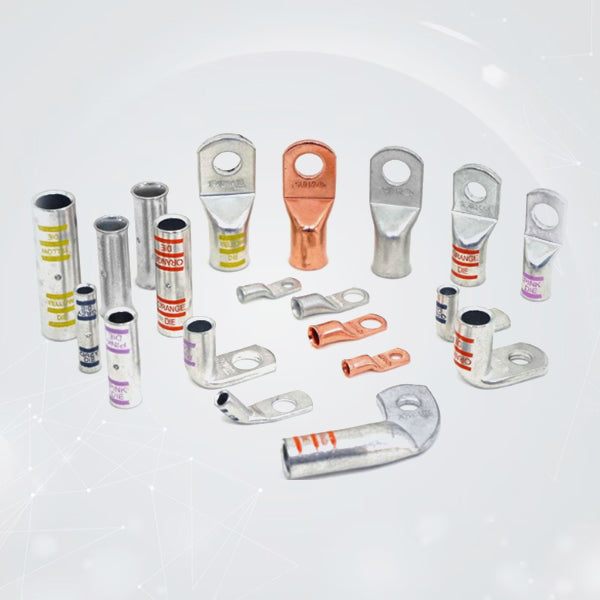


How a 90 Degree Battery Terminal Improves Cable Management
Routing thick power cables through tight spots like firewall gaps, custom truck beds, or cramped boat boxes is an absolute nightmare. If you try to force a heavy-gauge cable into a sharp bend, you end up straining the copper strands, stressing the component terminal, and cracking the plastic insulation jacket wide open. Straight connectors are completely useless when you run out of physical room.
When space is tight, a pre-formed 90 degree battery terminal is the only correct way to redirect a heavy circuit. It stops you from putting constant mechanical tension on the electrical joint. These right-angle fittings let the cable run perfectly flush against a wall or mounting surface, keeping the layout clean and saving the connection from vibration fatigue. Do not guess on the layout configuration, though. Forcing a straight terminal to do a right angle's job creates immediate system bottlenecks. You need a clean, metal-on-metal connection to pass heavy current without creating dangerous hot spots or dropping voltage inside an enclosed space.
Restoring Order to Complex Wiring Layouts
Look at the heavy cabling on dual-battery setups, commercial winches, or off-grid solar arrays. A major issue with standard layouts is the sheer amount of space required for the cable "droop"—the natural arc a thick wire needs so it doesn't kink. This droop hogs valuable space and creates a messy web of wires that are easy to snag during routine maintenance.
Swapping to premium 90 degree battery cable lugs changes the footprint of your layout completely. Instead of looping out into midair, the cable drops straight down or exits cleanly to the side the exact millisecond it clears the mounting stud. This tight profile keeps your wiring pinned close to the component body. It makes the entire system easier to trace, protects the lines from being pinched by heavy compartment lids, and keeps high-amperage lines separated from sensitive electronics or moving engine parts.
Why Pure Copper Needs a Tin Plating
Long-term structural reliability comes down to the metallurgy. Heavy-duty setups depend on connectors built from seamless C11000 electrolytic copper. This pure grade gives you the highest possible electrical and thermal conductivity. Because pure copper is naturally soft and workable, it crushes uniformly under heavy tool pressure.
A seamless right-angle barrel flows right around the individual wire strands instead of splitting open along a weak seam. This compression fuses the wire and terminal into one solid block of copper with zero hidden air pockets inside. The problem with raw, bare copper is oxidation. Leave it exposed to battery fumes, road grime, or damp air, and a green crust forms fast. That crust acts like an insulator and ruins electrical conductivity. An electroplated finish stops that damage before it starts. Tin completely ignores moisture and acidic environments. A micro-thin layer of tin wraps the raw copper core to create an airtight seal. This plating keeps the underlying copper fully isolated so your right-angle fittings maintain their raw current-carrying capacity without ever touching the air.
The Danger of Bolt-On Adapters
Check the spacing around the terminal pad before ordering hardware. If you run into a clearance issue, do not try to solve it by combining a standard straight terminal with a flimsy 90 degree battery terminal adapter.
Every extra bolt-on piece adds an unnecessary mechanical failure point to the circuit. These multi-piece adapters double the risk of things loosening up from chassis vibration, trap moisture between the stacked metal faces, and cause immediate voltage drops under peak loads. If you are running massive lines like a high-draw 2/0 90 degree lug setup, a single, solid piece of seamless bent copper is the only acceptable method to maintain a gas-tight, low-resistance bridge.
The Right-Angle Crimp Process
- Strip It to Bare, Bright Copper: Do not ever crimp over dark, corroded, or greasy wire strands. If the cable has been sitting around a damp shop, chop the bad ends off until you hit clean, bright metal. If it still looks a little dull, scrub the strands aggressively with a stainless steel wire brush. You want that copper shining before it goes anywhere near the barrel.
- Check Your Depth: Slide the wire jacket back to match the depth of the lug barrel. Shove the wire all the way in until copper strands pack tightly against the inspection window. The leftover insulation jacket needs to sit flush against the back of the barrel—keep any gap under a sixteenth of an inch.
- Use the Right Hex Die: Match your wire gauge exactly to the die on your crimping tool. No guessing here. Use a solid hydraulic or manual hex tool to crush the barrel completely. Let the tool go through its full mechanical cycle so it cold-welds the strands and terminal walls into a single, solid chunk of copper.
- Bury the Joint in Glue-Lined Heat Shrink: Slide a piece of heavy-wall, 3:1 adhesive-lined heat shrink directly over the raw metal connection and hit it with a heat gun. Wait until the internal glue melts and squirt out around the bottom edges of the tubing. That squeezed-out glue is your proof—it creates a permanent, waterproof seal that stops road salt, pooling water, and engine grease from rotting your wires over time.
Right-Angle Inspection and Long-Term Interface Care
Preventative care keeps an electrical system online over the long haul. Give every connection point a physical check once a season. Do not just glance at it. Get your hands in there. Check for lifting around the heat shrink edges or a dull, graying look on the metal surfaces. Wiping a little specialized dielectric paste or anti-corrosion spray over the bolted joint creates a solid backup boundary against the air.
If you have to pull a terminal off for an equipment upgrade, clean the pad faces right down to the bright tin layer with a clean rag and some isopropyl alcohol. Ditch the sandpaper. Never touch a tinned pad with a coarse file or heavy emery cloth. Aggressive scratching scrapes that thin protective tin layer right off the metal, exposing raw copper and inviting instant green rot. Scrap the worn hardware. If the tin looks visibly gouged, flaked off, or shows red copper bleeding through, throw it in the scrap bin. Do not reuse it. Just cut the wire back and crimp a fresh one into place.
High-Efficiency Routing for Confined Electrical Layouts
Look, your system's entire electrical performance relies on its worst connection point. Skimping on basic wire ends leads to messy engine bays, sudden power drops under heavy loads, and hours of brutal diagnostic work down the road. If you want hardware built to survive tight clearances, extreme engine temperatures, and constant chassis vibrations, upgrading to premium 90 degree battery cable lugs is vital.
Investing in heavy-duty right-angle hardware eliminates the risk of resistance build-up, messy cable routing, and structural metal failures. These lugs are manufactured from seamless copper tubes with thick, precision-machined flat pads that sit perfectly flush against your mounting surfaces. They take maximum crushing forces from a hydraulic tool without splitting open or cracking down the side. Integrating high-purity copper metallurgy with a premium tinned finish, professional hexagonal tooling, and a proper adhesive heat shrink seal provides a clean-looking, highly efficient power network that runs safely for decades.