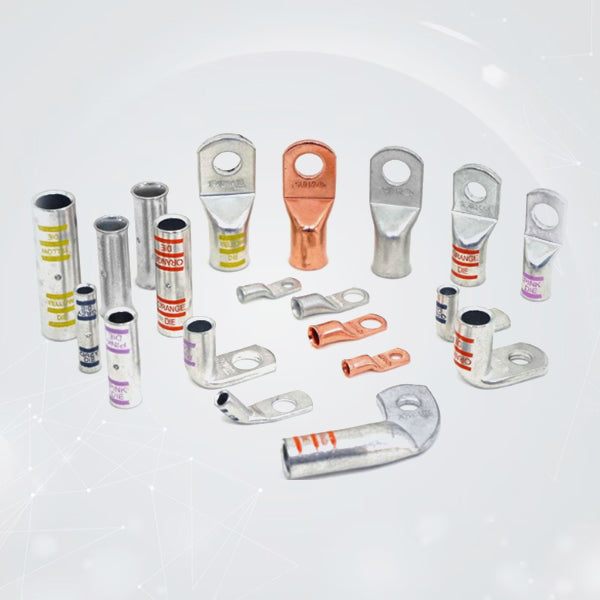


How to Avoid Overheating Issues with 1 AWG Lugs
Working with 1 AWG systems means handling serious electrical power. These setups drive industrial winches, large off-grid inverters, and heavy battery banks. Current levels often exceed 150 amps. Small errors create major failures at this scale.
Hot 1 AWG lugs indicate resistance problems. Heat melts insulation, pits battery posts, or starts fires. Cool operation requires eliminating resistance completely. Understanding connection weak points proves essential.
Why 1 AWG Lugs Overheat
Heat equals wasted energy. Current meets resistance and generates molecular friction. In 1 AWG cable lug connections, small resistance amplifies rapidly under high amperage.
The cable-to-1 AWG lug transition must flow seamlessly. Gaps, dirty surfaces, or loose bolts force current through restricted paths. Temperature spikes quickly. Damage follows.
Select Pure Copper 1 AWG Copper Lugs
Material determines heat performance. Online 1 AWG lugs often use brass or low-grade alloys with copper plating. These cannot handle thermal loads from 1 AWG wire lug connections.
Choose 1 AWG copper lugs made from 99.9% pure C11000 electrolytic copper. Pure copper conducts with minimal resistance. Current flows easily. Lugs stay cool under continuous heavy loads. Alloys become heaters immediately.
Perfect the Hex Crimp for 1 AWG Wire Lugs
Poor crimping causes most 1 AWG lugs overheating. Hollow crimps trap air between strands. Hammer crimpers or pliers flatten without fusing. Air remains. Oxidation follows. Resistance increases. Heat builds.
Hexagonal crimping compresses from six sides simultaneously. Copper strands and 1 AWG cable lug barrel form one solid mass. This "cold weld" expels all air. Internal corrosion cannot develop. Connections remain cool permanently.
Ensure Full Surface Contact
Perfect crimps fail without solid terminal contact. Interface resistance occurs when 1 AWG lug pads meet dirty or uneven surfaces. Current squeezes through tiny contact points.
Quality 1 AWG wire lugs have thick, perfectly flat pads. Clean both lug pad and battery post with wire brush or 400-grit sandpaper before bolting. Surfaces must shine. Complete metal contact eliminates resistance.
Apply Correct Torque Values
Loose bolts cause arcing and intense heat. Tight connections solve this issue. Excessive torque warps copper pads or strips threads. Connections loosen eventually.
Use a calibrated torque wrench. Battery terminals typically require 12 to 15 foot-pounds for 1 AWG lugs. Follow exact specifications. Star washers maintain pressure through temperature changes.
Seal Against Moisture Damage
Moisture destroys connections in marine, truck, or solar applications. Water wicks through cable insulation into 1 AWG copper lug barrels. Copper oxidizes green. Conductivity drops. Heat increases.
Adhesive-lined heat shrink provides permanent protection. Slide tubing over 1 AWG lugs before crimping. Heat melts inner glue. It flows into gaps for waterproof seal. This step adds decades to connection life.
Testing Methods for Problem Detection
Regular testing prevents failures.
Touch Test: Run system under heavy load for ten minutes. Touch 1 AWG cable lugs carefully. Warmth proves normal. Painful heat signals resistance. Wires run cooler than bad lugs.
Voltage Drop Test: Multimeter on millivolts. Probe cable and battery post during full load. Over 50 millivolts indicates poor 1 AWG wire lug connections. Clean, re-crimp immediately.
Infrared Scanning: Spot 10°C rises before damage occurs. Monthly checks catch issues early.
Installation Checklist for Cool Connections
Follow these steps precisely:
- Use 99.9% C11000 copper 1 AWG lugs only
- Match barrel size exactly to 1 AWG cable
- Strip 1/2 inch, avoid nicked strands
- Hex crimp with full ratchet pressure
- Clean all contact surfaces shiny
- Torque 12-15 ft-lbs with wrench
- Apply 4:1 adhesive heat shrink
- Test 100 lb pull and voltage drop
Performance Comparison Examples
Coastal winch at 200 amps used alloy 1 AWG lugs. Terminals hit 85°C after 30 minutes. Pure copper 1 AWG copper lug stayed at 42°C. No failures after two years.
Solar bank at 150 amps continuously showed 0.08V drop with alloys. Hex crimped 1 AWG lugs measured 0.02V. Energy harvest rose 2.3% annually.
Marine starters in saltwater used tinned 1 AWG wire lugs with heat shrink. Zero corrosion after three seasons. Untreated connections failed completely.
Capacity and Sizing Guide
| Application | Amps Continuous | Lug Type | Torque ft-lbs |
| Winches | 200 | 1 AWG Copper | 15 |
| Inverters | 150 | 1 AWG Tinned | 12 |
| Battery Banks | 175 | 1 AWG Copper | 14 |
Maintenance Procedures
Monthly: Inspect visually, check torque marks
Quarterly: Voltage drop test under full load
Annually: Disassemble, clean, re-crimp suspects
Post-surge: Complete re-test sequence
Professional Component Sources
The Selterm 1 AWG Bare Copper Lug collection supplies C11000 copper 1 AWG lugs with correct barrel sizing and stud options. Tinned versions suit marine use. Kits include torque specs and heat shrink.
Investment Protection Value
High-power systems cost thousands. One melted 1 AWG lug connection creates $2,000+ repairs. Quality 1 AWG copper lugs cost pennies per amp. Savings compound over 10-25 years.
Pure copper, hex crimps, clean contacts, and sealed 1 AWG cable lugs run cool and reliable. Winches pull maximum loads. Inverters deliver full power. Battery banks perform optimally without issues.
Connection Summary:
- Pure C11000 copper 1 AWG lugs
- Exact barrel fit, hex compression
- Shiny clean contacts
- Proper torque and waterproof seal
- Verified testing confirms quality
Build to professional standards. Cool 1 AWG wire lug last decades. Poor connections demand frequent replacement.