

How to Choose the Right 8 AWG Tinned Lug for Your Project
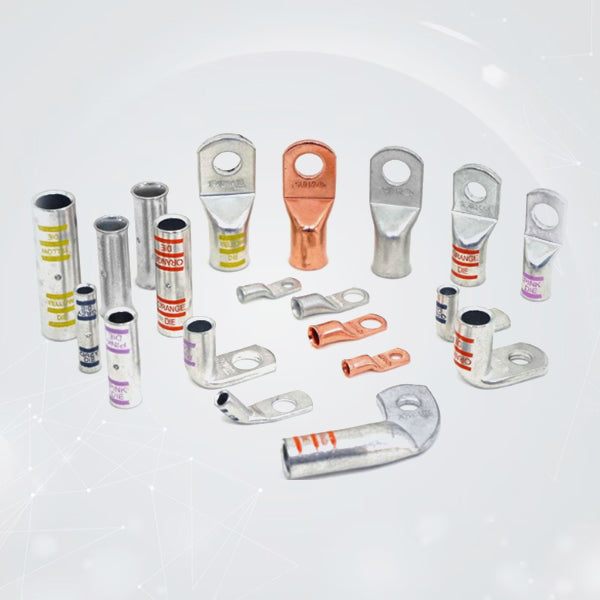
An 8 AWG tinned lug is a copper ring terminal made for 8 AWG wire. The surface is covered with a thin layer of tin, so it looks silver, not copper. That tin helps it handle moisture, humidity, and salt better than bare copper.
People call them:
- 8 AWG tinned lugs
- 8 gauge tinned lug
- 8 gauge tinned lugs
They’re used to connect an 8 AWG battery cable or power cable to:
- Battery terminals
- Studs on the bus bar
- Inverter terminals
8 AWG is a common size for medium to high current, but only if the lug is built for it and installed right.
Step 1: Match the Lug to 8 AWG Cable
First thing – the lug has to be for 8 AWG cable. Not 6 AWG, not 10 AWG, not “close enough”. It has to be 8 AWG.
If the lug is too small:
- It can’t carry the current
- It gets hot
- The crimp fails
If the lug is too big:
- The cable doesn’t fill the barrel
- The crimp is weak
- The cable can pull out under load
So when you pick an 8 AWG tinned lug, make sure it clearly says 8 AWG or 8 gauge. Check the barrel – it should be long enough so the cable fills it properly, no loose strands left out.
Step 2: Check the Stud Size
An 8 AWG tinned lug is no good if it doesn’t fit the stud on the terminal.
Common stud sizes with 8 AWG:
- 1/4 inch
- 5/16 inch
- 3/8 inch
If the terminal is 1/4 inch, use a 1/4 inch 8 AWG tinned lug. If it’s 3/8 inch, use 3/8 inch. Don’t force a small lug on a big stud or use a big lug on a small stud. It either won’t fit or will be loose, and that’s dangerous.
If you’re not sure what size the stud is:
- Take a ruler or caliper and measure it
- Look at the existing lug if there is one
- Match the hole in the new 8 gauge tinned lug to that size
A good fit means the lug sits tight on the stud, no wobble, no forced mounting.
Step 3: Think About Current – Is It a Heavy‑Duty Job?
8 AWG is good for a fair amount of current, but not every job is the same.
Ask:
- Is this a high‑current connection? (inverter, winch, starter, alternator)
- Is it on all the time or just occasionally?
- Is it on a battery bank, solar setup, or backup system?
If it’s a big job – inverter, winch, starter, or something that runs for long periods – then use a heavy‑duty 8 gauge tinned lug. Thick walls, thick barrel, solid copper.
If it’s for lights, a small accessory, or something that draws less current, a standard 8 AWG tinned lug is usually fine. But still, make sure it’s real copper, not some cheap alloy that looks like copper.
Step 4: Match the Environment
Where the 8 gauge tinned lug will be used changes the game.
If it’s indoors, in a dry place, not exposed to rain, sweat, or salt:
- A good 8 AWG tinned lug will be fine
- Less corrosion, less maintenance
If it’s outdoors, in a boat, RV, solar setup, engine bay, or near the sea:
- Moisture, humidity, and salt eat bare copper fast
- Tinned copper handles it much better
-
8 AWG tinned lugs stay cleaner, last longer, and need less cleaning
So for: - Boats, RVs, solar, and off‑grid systems
- Any place with dew, rain, or salty air
Go for 8 gauge tinned lugs. They’re worth the little extra for the peace of mind.
Step 5: Check the Quality – Don’t Pick the Cheapest One
Not all 8 AWG tinned lugs are the same. Cheap ones:
- Use thin copper
- Have weak walls
- Tin that flakes or wears off fast
- Are made from cheap alloy, not real copper
Good quality 8 gauge tinned lugs:
- Use thick, solid copper
- Have a decent barrel and wall thickness
- Are marked with size and sometimes standard (like 8 AWG, 1/4")
- Feel heavy and solid, not light and flimsy
If a lug feels cheap, looks flimsy, or is way cheaper than others, it’s probably not for a serious job. For 8 AWG power connections, it’s better to spend a bit more on a proper 8 AWG tinned lug than replace it later.
Step 6: What Type of Lug Does Selterm Offer?
At Selterm, the 8 AWG tinned copper lugs are ring terminals. That means they have a closed loop that goes over a stud or bolt. They’re designed for:
- Battery terminals
- Studs on bus bars
- Inverter and equipment terminals
They’re not fork lugs or spade lugs in this 8 AWG tinned lugs collection. So if the job is on a stud or bolt, ring lugs are exactly what you need.
If the setup uses a screw instead of a stud, ring lugs usually still work as long as the hole size matches the bolt and the nut can be tightened properly.
Step 7: Install It Properly
Even a good 8 gauge tinned lug fails if it’s not crimped and mounted right.
Simple things to do:
- Use a proper crimping tool for copper lugs, not pliers
- Make sure all strands are inside the barrel, no loose ends
- Crimp once, with even pressure, so the lug is tight and solid
- Use heat shrink tubing over the crimp, especially in damp or outdoor setups
- Check the connection after a few hours of use – look for heat, discoloration, or loose nuts
If the lug is loose, the cable pulls out, or the crimp is bad, it’s only a matter of time before it fails. Do it once, do it right, and it’ll last.
Step 8: Where You’ll Actually Use 8 AWG Tinned Lugs
If you’re not sure when 8 AWG tinned lugs make sense, common places are:
- Battery cables (starter, main ground, battery links)
- Inverter connections
- Winch, trolling motor, and other heavy accessories
- Solar charge controller and battery links
- RV and boat battery systems
- High‑power audio and lights
If it’s 8 AWG and it’s a real power job, 8 gauge tinned lugs are usually the right choice.
Final Thoughts
Picking the right 8 AWG tinned lug isn’t complicated. It comes down to:
- 8 AWG for 8 AWG cable
- Right stud size for the terminal
- Quality copper lug, not some cheap junk
- Tinned copper for damp, salty, or outdoor environments
A good 8 AWG tinned lug, properly crimped and mounted, will:
- Carry current efficiently
- Stay cooler
- Resist corrosion
- Keep the system reliable
If you’re using 8 AWG cable for a battery, inverter, winch, trolling motor, or similar job, taking a few minutes to pick the right 8 gauge tinned lugs is a simple way to avoid problems later.
Match the cable, match the stud, pick a solid lug, and the connection will just work.