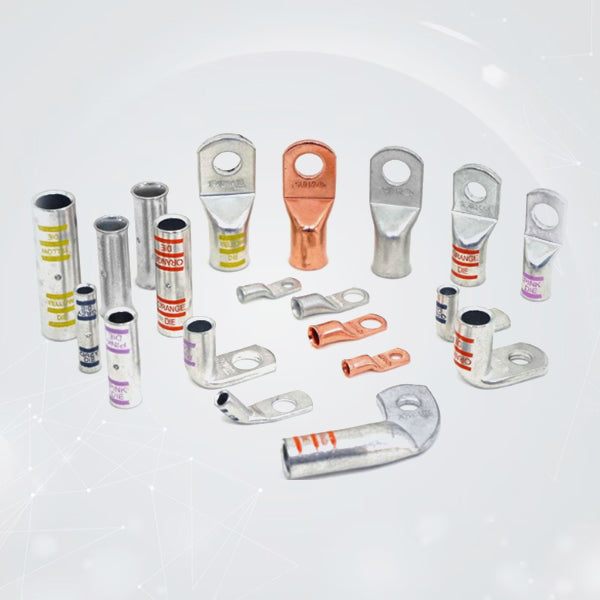


How to Match Cable Type and 6 AWG Lugs for Maximum Reliability
Getting cable and lugs right isn't complicated, but it makes a huge difference in reliability. Wrong match leads to heat, voltage drop, or early failure. Right match runs cool and lasts years.
6 AWG lugs pair with 6 AWG cable for starter batteries, house banks, charge controllers, and mid-range inverters. 6 awg lug choice depends on cable type, environment, and application. Here's how to match them properly for 6 gauge wire lug and 6 gauge awg battery lugs setups.
Understand 6 AWG Cable Types First
Not all 6 AWG cables perform the same. Three main types for battery/inverter work:
1. Welding Cable (600V stranded)
- Super flexible (1000+ strands)
- Thick insulation handles heat/vibration
- Best for: tight engine bays, marine, frequent flexing
- Drawback: Slightly higher resistance than solid types
2. Battery Cable (Type 1 or 3, 105°C)
- Medium flexibility (19-41 strands)
- Oil/gas resistant
- Best for: RVs, solar battery banks, inverters
- Standard for most 6 gauge awg battery lugs
3. THHN/THWN (solid or 7-strand)
- Stiffest, cheapest
- Good for fixed runs (conduit, panels)
- Avoid for vibration/flexing
Pick cable first. Lug follows cable type.
Barrel Size – The Critical Match
6 awg lugs come in different barrel lengths/diameters. Match to your cable construction.
Short barrel (1"): Welding cable, fine strands. Fills easier.
Long barrel (1.5"): Battery cable, coarser strands. More crimp area.
Rule: Cable must fill 90%+ of the barrel. Loose fit = poor crimp = heat.
Welding cable needs a smaller ID barrel. Battery cable takes standard ID. Test fit before crimping.
Insulation Rating Compatibility
Cable insulation temps: 60°C, 90°C, 105°C. 6 gauge wire lug doesn't have insulation rating, but the system must match.
105°C battery cable + heavy 6 awg lug = marine/RV ready.
90°C welding cable + same lug = engine compartment safe.
60°C building wire + lug = indoor panels only.
Hot inverters melt lesser insulation. Match cable temp rating to hottest spot.
Stud Size for Your Application
6 awg lug hole must fit terminal stud. Common sizes:
Battery Posts:
- Top post: 3/8"
- Side post: 5/16" or 3/8"
Inverter/Controller Terminals:
- 1/4" (smaller units)
- 5/16" (2-3kW inverters)
- 3/8" (larger controllers)
Bus Bars/Ground Points:
- 1/4" to 3/8"
Measure stud diameter. Buy matching 6 gauge awg battery lugs. 1/16" mismatch causes arcing.
Flex vs Vibration – Cable/Lug Pairing
High vibration (engines, boats):
- Welding cable + tinned 6 awg lugs
- Thick heat shrink strain relief
- Lock washers on studs
Moderate flex (RVs, solar banks):
- Battery cable + bare copper 6 gauge wire lug
- Adhesive heat shrink
- Standard washers
Fixed runs (conduits):
- THHN + bare 6 awg lug
- Basic insulation ok
Welding cable + lug handles 10G vibration. Stiff THHN snaps without flex relief.
Current Capacity Matching
6 AWG handles 55-75A continuous (NEC 75°C). Applications:
Starter Circuits: 200-400A cranking. 6 awg lug handles surge.
Solar Controllers: 40-60A charge. Perfect match.
Inverter Feed: 1500-2000W at 12V. Right size.
Trolling Motors: 40-50A. Standard.
4 AWG lugs overkill (115A). 8 AWG lugs undersized (40A continuous).
Material Choices by Environment
Dry/Indoor:
- Bare copper 6 gauge awg battery lugs
- Cheaper, excellent conductivity
Marine/Coastal/Solar:
- Tinned copper 6 awg lugs
- Salt/moisture resistance
- Longer clean contact
Engine Bays:
- Tinned + heavy heat shrink
- Oil/heat/gas resistant
Bare copper fine short term. Tinned copper for 5+ year reliability.
Crimping – Where Most Matches Fail
Wrong crimp ruins perfect cable/lug pair.
Tools:
- Hex die crimper (best)
- Indent die (good)
- Never pliers/hammer
Technique:
- Twist strands lightly
- Insert fully (insulation kisses barrel end)
- Single center crimp
- Rotate 90° second crimp (long barrels)
- Tug test
Welding cable: Smaller die. Battery cable: Standard die.
Heat Shrink – Seals the Deal
Always cover 6 gauge wire lug crimps.
2:1 standard: Basic protection.
3:1 adhesive: Moisture seal. Marine/solar must.
4:1 heavy wall: Vibration/ abrasion.
Position: 1" cable + full lug coverage. Shrink even.
Cable Length Voltage Drop Calculator
Long runs need verification. 3% drop max recommended.
| Distance One Way | 12V Max Amps | 24V Max Amps | 48V Max Amps |
| 10 ft | 75A | 150A | 300A |
| 20 ft | 40A | 80A | 160A |
| 30 ft | 25A | 50A | 100A |
6 AWG shines 10-20 ft runs under 60A. [Standard voltage drop tables]
Common Applications and Lug Specs
RV Dual Battery:
- Welding cable + tinned 6 awg lug (3/8")
- Isolator feed
Solar MPPT Controller:
- Battery cable + bare 6 gauge awg battery lugs (5/16")
- 40A charge
Marine Starter:
- Battery cable + tinned 6 awg lug (3/8")
- Engine cranking
Trolling Motor:
- Welding cable + 6 gauge wire lug (5/16")
- Bow mount
Troubleshooting Mismatched Setups
Hot lugs: Undersized cable or bad crimp.
Voltage sag: Long run or loose stud.
Corroded crimp: No heat shrink.
Pulls out: Wrong barrel or poor crimp.
Recrimp with proper die fixes 90%.
Cost Reality Check
6 AWG cable: $2-4/ft
6 awg lug: $1-2 each (bare), $1.50-3 (tinned)
Crimper: $30-100
Total 10ft run + 4 lugs + shrink: ~$40. Protects $1000+ batteries/inverters.
Final Thoughts
Matching cable and 6 AWG lugs comes down to:
Cable type → barrel size → stud hole → material → crimp quality
6 awg lug + battery cable = RV/solar staple.
6 gauge wire lug + welding cable = marine/engine winner.
6 gauge awg battery lugs + right heat shrink = long term reliability.
Wrong match overheats. Right match runs forever.