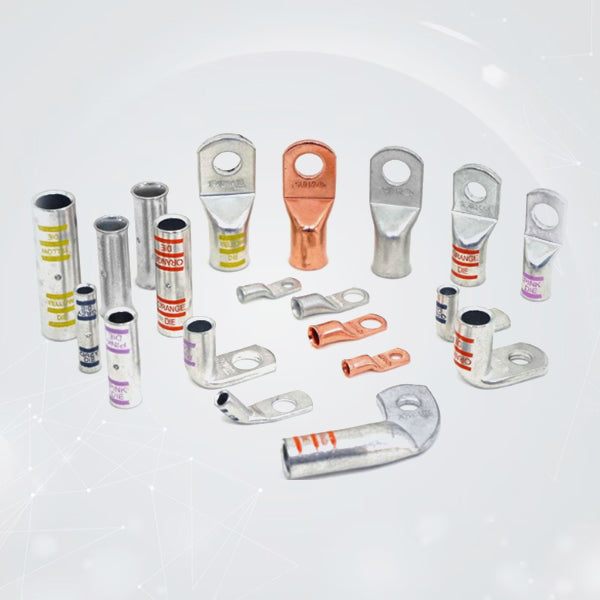


Understanding the Load Capacity of 4 AWG Lugs in Power Systems
Imagine wiring up a beefy car audio setup, a boat's battery bank, or an off-grid solar rig. The battery choice is spot on, and the cable is solid. Then something fails, and it is not the wire. It is the 4 AWG lug, the small connector that bridges the cable to the terminal. Overlooked 4 AWG lugs often turn into hotspots. These issues kill efficiency or, worse, spark trouble.
4 AWG lugs handle mid-range heavy lifting in power systems. They manage 70-100 amps without breaking a sweat. Their load capacity is more than specs on a page. It means safer, cooler-running gear that lasts. This guide breaks it down simply for confident builds.
Why 4 AWG Hits the Sweet Spot
In the AWG world, 4 gauge wire strikes a great balance. It pushes serious current over moderate distances with minimal voltage sag. At the same time, it remains flexible enough to snake through tight spots like engine bays or RV walls. No one wrestles stiff 0 gauge cable in a cramped boat bilge.
This capability demands 4 AWG cable lugs that keep up. A good 4 AWG wire pulls 70-100 amps. Ratings depend on insulation temp rating and setup, such as 90°C-rated THHN. Subpar 4 AWG copper lugs create a choke point. Current bottlenecks form, heat builds, and power slips away. It is like a wide highway narrowing to a dirt road right before the exit.
Load Capacity Explained: It's About Heat, Not Just Amps
Load capacity boils down to how much current flows through without the connection overheating or dropping voltage. Consider it the 4 AWG lugs endurance rating under real stress.
1. Material Makes the Magic
Cheap lugs use brass or sketchy alloys with higher resistance. They warm up fast. C11000 electrolytic copper 4 AWG lugs hit 100% IACS conductivity. Pure copper delivers low resistance and no extra heat. These stay cool even at 80 amps continuously.
2. The Contact Zone Counts
Resistance lives at the interface, where 4 AWG cable lugs meet the terminal. A top 4 AWG lug has a broad, machined-flat pad for maximum skin-to-skin contact. Tiny or rough pads cause resistance to jump and voltage to dip. At 80 amps, even 0.1 ohm extra means real power lost as heat. Smooth contact lets current glide through.
3. Heat Dissipation Is Key
Current squared times resistance equals heat, known as I²R losses. Quality 4 AWG copper lugs have beefy walls to wick it away. This feature proves crucial for long-haul loads like solar banks dumping power for hours. Poor ones turn into toasters.
Real-World Spots Where 4 AWG Lugs Shine
These components are not lab toys. They prove battle-tested in 12V/24V systems moving real juice.
Inverters: A 1000-2000W unit on short runs screams for 4 AWG lugs. Solid 4 AWG cable lugs prevent "low voltage" shutdowns from connection drag.
Marine Setups: Salt air corrodes everything. Tinned 4 AWG lugs fight "green death" oxidation. They keep capacity steady for years.
Off-Road/RV: Winches surge to 100+ amps. House banks handle steady draws. Vibration-proof 4 AWG copper lugs maintain the link over bumpy trails.
RVs that pound desert roads for months show zero connection failures with proper 4 AWG lugs.
Bare Copper or Tinned? Pick Your Fighter
Check out
Options include bare or tinned. Which fits the job?
Bare Copper Lugs
They offer the purest conductivity from the start. They suit dry, sealed spots like indoor audio racks or garage solar. Pros favor them for crisp, low-loss paths with no oxidation worries if protected.
Tinned Copper Lugs
Tin plating adds a hair more resistance, but it is negligible. It seals out air and moisture. Bare copper greens up in humidity and insulates itself over time. Tinned 4 AWG lugs stay shiny in garages, boats, or coastal vans. The tradeoff proves worth it for exposure.
Pro move: Match the environment. Choose bare for a dry shop. Select tinned 4 AWG cable lugs for outdoors.
Crimp Right, or Kiss Capacity Goodbye
A fancy 4 AWG lug paired with pliers spells disaster. A gas-tight crimp fuses wire and lug like welded metal. It leaves no air gaps for corrosion.
Use a hex-crimp tool sized for 4 AWG lugs. It squeezes every strand into play with no stragglers. Look for the inspection hole. Slide wire in until it peeks out, then crimp. Loose crimps fail first from heat cycles that loosen the grip.
A wrong crimp cuts strands and soars resistance. A right one stays bulletproof for decades.
The Numbers: See the Stakes
| Connection Quality | Resistance | Voltage Drop | Heat Loss (Watts) |
| High-Quality 4 AWG Lug | 0.3 mΩ | 0.024V | 1.9W |
| Poor/Loose Crimp | 5.0 mΩ | 0.400V | 32.0W |
That 32 watts softens battery posts, warps plastic, or ignites dust. Quality 4 AWG copper lugs save power and prevent fires. It is safety 101.
For solar, an 8-hour draw at 80A on a 24V bank wastes 256 watt-hours as heat with poor connections. That hurts panel output.
Safety and Standards You Can't Ignore
Standards like ABYC for marine, NEC for general, and SAE for auto set ampacity rules. 4 AWG copper at 90°C handles 95 amps in free air, less when bundled. 4 AWG lugs must match. Common barrels rate to 105°C.
Vibration, temp swings, and cycles stress connections. UL-listed 4 AWG cable lugs like Selterm's pass torture tests. Generics flake under load.
Building It Right: Step-by-Step
- Size Match: Pair 4 AWG wire to 4 AWG lug barrel. Avoid forcing.
- Prep Wire: Strip 1/2 inch insulation with no nicks.
- Insert Fully: Use the inspection hole.
- Crimp Hex-Style: Apply one firm pass.
- Test Pull: Tug hard with no slip.
- Assemble: Torque to spec, usually 50-75 in-lbs for M8.
Add dielectric grease for seals and loctite on bolts. This achieves max capacity.
Wrapping It Up: Your System's Weak Link?
Power setups thrive or die by connections. High-quality 4 AWG lugs from C11000 copper, properly crimped, unlock the wire's full potential. They bring peace of mind for van life, boat cruises, or solar independence. The value is priceless.
Quick Wins for Your Build:
- Exact gauge match: 4 to 4.
- C11000 copper for peak flow.
- Tinned for wet worlds.
- Hex crimper mandatory.
- Inspect post-crimp.