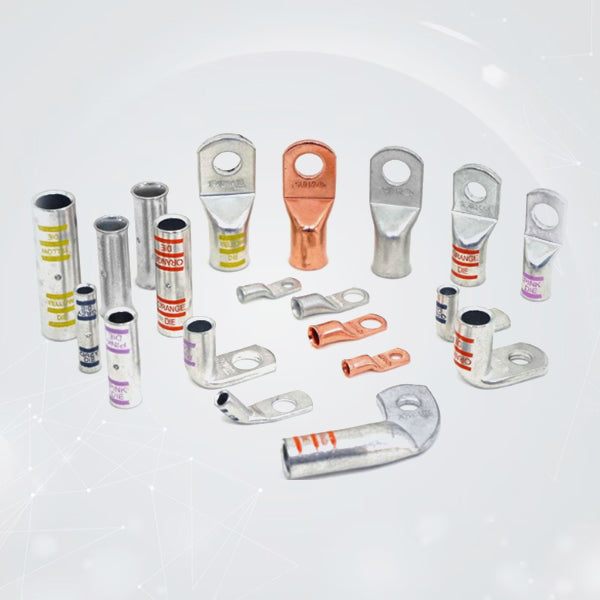


Understanding the Specifications of 6 Gauge Lugs
Whether you are upgrading the power cables on a golf cart, hooking up a backup solar battery bank, or installing a heavy-duty winch on an off-road truck, you will inevitably run into 6 AWG wire. It is the sweet spot for projects that need to pull a serious amount of electrical current without becoming as stiff and unmanageable as a steel pipe.
But a high-current wire is only as good as the connector on the end of it. Grab a cheap, poorly fitting terminal, and you create an immediate electrical bottleneck. To prevent your hard work from turning into a melted mess under load, let’s break down the actual mechanical specifications of 6 gauge lugs in plain, simple terms.
The Core Math: Bare Wire vs. Lug Barrel Size
The first specification to understand is the barrel—the hollow tube where you insert the stripped wire. In the American Wire Gauge (AWG) system, wire numbers are counterintuitive: the smaller the number, the thicker the wire.
A solid piece of 6 AWG copper wire has a physical diameter of about 0.162 inches (4.11 mm). However, you aren't going to be using a single solid copper rod to wire a vibrating vehicle chassis or a tight battery box. You will be using flexible battery cable or welding wire made of dozens or hundreds of fine, braided copper strands. Because these strands bunch up and shift, they expand the total width of the wire bundle.
A properly engineered 6 gauge wire lug features an internal barrel diameter (ID) of roughly 0.20 to 0.22 inches. This small amount of extra clearance is designed exactly so that all those tiny copper strands slide cleanly inside the tube without catching, fraying, or bending backward. If the barrel is too big, your crimping tool won’t be able to squeeze out the internal air space, leaving pockets where moisture can trap and cause invisible corrosion.
Post Configurations: Choosing Your Stud Hole Sizing
Once the wire is safely inside the barrel, you have to bolt the flat pad of the connector down to your power source or frame ground. The hole in that flat pad is called the stud size, and choosing the right one is critical for keeping electrical resistance low.
The most common stud sizing options you will find for a 6 awg wire lugs include:
- 1/4" Stud (approx. 6.4 mm): Frequently used on small solar charge controller terminal blocks, secondary distribution panels, and compact automotive grounding bolts.
- 5/16" Stud (approx. 8 mm): The standard size for deep-cycle RV batteries, golf cart terminal linkages, and mid-sized marine bus bars.
- 3/8" Stud (approx. 10 mm): The classic layout for heavy-duty vehicle starter solenoids, industrial master cutoff switches, and standard top-post automotive battery clamps.
Never drop a large 3/8" hole over a skinny 1/4" bolt just because it's what you have lying around. Shrinking the flat metal surface area contact means electricity has to fight its way across a smaller "bridge," creating a localized hot spot when your circuit is running full tilt.
Structural Purity: Why Seamless Design Matters
When pushing 50 to 70 amps through an electrical connection, the way the lug is constructed makes a huge difference. Cheap electrical connectors are stamped out of thin sheet metal and folded into a cylinder, leaving a visible seam down the barrel.
Professional-grade 6 gauge lugs are made from seamless copper tubing. When you crush a seamless barrel with a mechanical tool, the metal flows uniformly without cracking or splitting open under pressure.
|
Structural Metric |
Industrial Standard |
What It Means to You |
|
Base Material |
99.9% Pure Annealed Copper |
Ensures maximum electrical flow with minimal voltage drop. |
|
Barrel Type |
Seamless Tubing |
Eliminates the risk of the connector splitting open when tightly crimped. |
|
Pad End |
Closed-Pad / Solid Nose |
Completely seals the wire strands away from outside air and road spray. |
|
Coating |
Bare or Electro-Tinned |
Bare copper is highly conductive for dry spaces; tinned variants stop saltwater oxidation. |
For dry interior setups, like a home power inverter cabinet, clean 6 gauge lugs made from unplated copper give you incredible raw conductivity. If the joint will live in an engine bay or a boat bilge, tinned copper provides a protective barrier against harsh weather.
How to Get a Perfect Crimp Every Time
To build a low-resistance connection that can survive vibrations and changing temperatures, skip the standard shop pliers and follow these steps:
- Strip Cleanly: Strip away the outer insulation jacket to match the depth of your terminal barrel. Be careful not to nick or cut any of the fine inner copper strands.
- Seat the Cable: Push the bare wire completely into the barrel. The plastic jacket should sit flush against the back rim of the lug with no exposed copper showing.
- Use a Real Tool: Compress the barrel using a heavy rotary indent tool or a dedicated 6 awg compression lug tool. This high mechanical pressure permanently cold-welds the wire and the barrel into a single, solid piece of copper metal.
- Insulate the Joint: Slide a piece of adhesive-lined heat shrink tubing over the connection. Shrink it down with a heat gun until the internal glue squeezes out the ends, locking out moisture and road grime permanently.
Securing Your Power System Foundation
Cutting corners on your heavy DC terminations is an easy way to cause mysterious voltage drops, dead batteries, or electrical failures down the line. Taking the time to understand your wire gauge math, match your stud holes exactly, and use high-conductivity seamless copper components ensures your electrical builds stay safe and reliable.
If you are setting up a solar panel bank or upgrading an old truck, using commercial-grade parts protects your equipment from high-resistance damage. Avoid generic, thin-walled hardware that can split under pressure. Check out the Selterm 6 AWG Product Line to find heavy-duty, field-tested 6 gauge lugs built to keep your high-amp projects running smoothly for years to come.