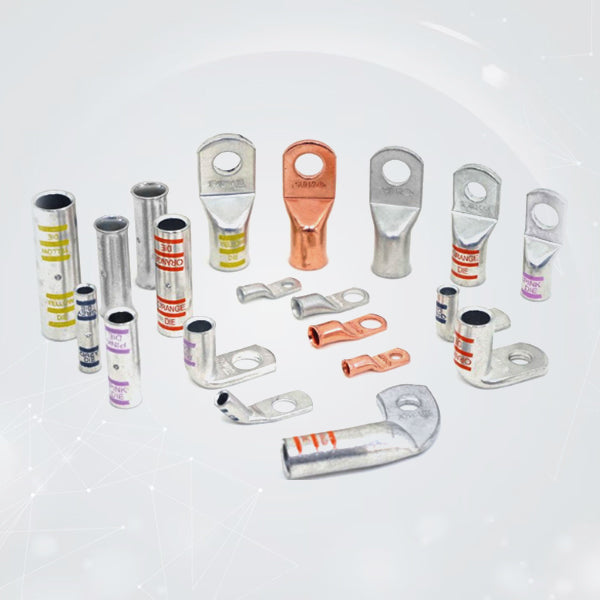


What Are 90 Degree Battery Lugs and When Should You Use Them?
Battery cables are not always installed in a nice, open space where the wire can run straight out from the terminal. Sometimes the battery is pushed into a corner, the busbar is mounted against a wall, or there is barely enough room to turn a thick cable without putting a lot of pressure on it.
That is where 90 degree battery cable ends can make the installation much easier. Instead of forcing a heavy cable to make a sharp turn immediately after the connection, the lug itself changes the direction of the cable. It is a small design change, but it can make a big difference when space is tight.
So, What Is a 90-Degree Battery Lug?
The name is fairly literal.
A standard battery lug has the cable barrel and the terminal hole arranged in a straight line. The cable comes into the barrel and continues in roughly the same direction as the terminal connection.
A bent version changes that arrangement. The cable exits the lug at roughly a right angle to the mounting surface.
That means you can bolt the terminal onto a battery, busbar, inverter or other connection point and have the cable leave sideways instead of sticking straight out.
SELTERM's range includes 90-degree bent lugs in several cable gauges and stud sizes, with both bare copper and tinned copper options available.
It isn't really about making the wiring look neater, although that can be a nice side effect. The main reason is simply to give a heavy cable somewhere sensible to go.
The Problem With Forcing a Straight Lug
Large battery cable is not particularly easy to bend.
A small automotive wire can be moved around with one hand. Try doing the same thing with 2/0 or 4/0 cable and the situation changes quickly.
If the terminal is pointing in the wrong direction, you may end up putting a tight bend right next to the lug. The cable can push against the battery box, rub against another component, or put sideways pressure on the terminal itself.
That pressure doesn't necessarily cause an immediate failure.
The connection may work perfectly when you first install it. But if the cable is constantly pushing against the lug, engine vibration and movement can eventually take their toll. The point where the cable enters the barrel is particularly worth protecting because that is where the rigid terminal meets the flexible cable.
A bent lug moves the change of direction away from the cable and into the terminal itself.
When Does a 90-Degree Lug Actually Make Sense?
Look at the route the cable needs to take.
If the cable can leave the terminal naturally without being sharply bent, a straight lug is usually perfectly fine. There is no reason to use a bent version just because it is available.
Things change when the connection sits close to a wall or another piece of equipment.
A battery mounted in a narrow compartment is a good example. A straight terminal may point directly toward the side of the enclosure. Bending a thick cable around that obstruction can take more room than you have.
With a 90 degree battery terminal, the cable can leave the connection sideways and follow the available space.
The same idea works when a battery sits underneath a seat, inside an RV cabinet, near an inverter, or beside a busbar where cable clearance is limited.
RVs Are Full of Tight Wiring Spaces
RV battery compartments are a good place to see why the shape of a terminal matters.
There may be batteries sitting close together, an inverter nearby, cables running through the same compartment, and an enclosure that leaves very little spare room.
A straight lug can force the cable to make an awkward loop before it reaches its next connection. That uses extra cable and, more importantly, can put unnecessary strain on the terminal.
A right-angle connection can let the cable come away from the battery and immediately follow the route it needs to take.
The same thing can happen in camper vans and other compact electrical installations where every inch of space has a job.
Marine Wiring Has Its Own Version of the Problem
Boats don't exactly give electrical installers unlimited room either.
Battery compartments can be cramped, and heavy cables often need to be routed around engines, bulkheads and other equipment. Add constant vibration and a damp environment, and a cable that is being forced into an awkward bend isn't something you want to ignore.
This is one situation where battery terminal 90 degree designs can be useful.
SELTERM offers bent versions in both bare and tinned copper, depending on the application. The collection also includes different stud and cable sizes, so the terminal can be matched to the connection rather than forcing the cable to fit an inconvenient layout.
For marine installations, the choice between bare and tinned copper should also take the surrounding conditions into account.
Solar and Battery Storage Can Benefit Too
The same space problem shows up in solar battery installations.
An inverter or battery cabinet may have its terminals facing sideways while the cable needs to run along the cabinet wall. With a straight lug, the installer may have to create a wide bend or leave excess cable hanging in the enclosure.
A right-angle lug can shorten that route and keep the cable closer to the intended path.
This is particularly useful when several thick cables are entering the same enclosure. A cleaner cable path can make the connections easier to inspect later and reduce the amount of cable being pushed against neighbouring components.
SELTERM's current collection includes 90-degree options ranging from smaller cable sizes through larger 4/0 AWG configurations, along with different stud sizes.
Don't Choose the Angle Before Checking the Stud
There is one measurement that should not be skipped.
A lug needs to match both the cable and the stud it will be mounted on.
For example, SELTERM sells 4/0 AWG bent lugs for both 5/16-inch and 3/8-inch studs. Those are not interchangeable simply because the cable size is the same.
So before ordering, check:
-
Cable gauge
-
Stud or bolt diameter
-
Available clearance around the connection
-
Direction the cable needs to travel
-
Whether bare or tinned copper is more suitable
Also look at the orientation before crimping. Once the lug is permanently attached to the cable, changing its direction is not exactly convenient.
A quick dry fit can save you from making an otherwise good cable assembly that points the wrong way.
What About the Crimp?
The 90-degree shape does not change the basics of making a good cable connection.
The conductor needs to be fully inserted into the barrel, and the lug needs to be crimped using suitable tooling. The cable should not be twisted or under tension while the connection is being made.
After the crimp, check the cable entry point. There should not be loose strands sticking out, and the cable should not move independently of the lug.
Some SELTERM kits also include adhesive-lined heat-shrink tubing, which can help protect the cable entry and connection from moisture and contamination.
The point is simple: the bent shape solves a routing problem. It does not compensate for a poor crimp.
When Should You Stick With a Straight Lug?
Not every installation needs a bent terminal.
If there is plenty of room around the battery and the cable can make its natural bend without putting pressure on the connection, a straight lug is often the simpler option.
There is also no benefit in adding a 90-degree bend just for appearance.
Use the shape that suits the actual cable route. If the cable wants to run straight, let it. If the equipment forces the cable to turn immediately, that is when a bent terminal starts making sense.
A Better Fit for Awkward Battery Compartments
The useful thing about 90 degree battery lugs is that they solve a very ordinary installation problem.
They give a heavy cable a predetermined direction instead of asking the cable to make that turn on its own.
For RVs, boats, solar battery systems, vehicles, inverters and other installations where space is limited, that can mean less cable stress, fewer awkward bends and a connection that sits more naturally in the available space.
The important part is choosing the right cable size, stud size and orientation before making the crimp. Get those details right, and the bent lug becomes one less thing fighting against the layout of the system.