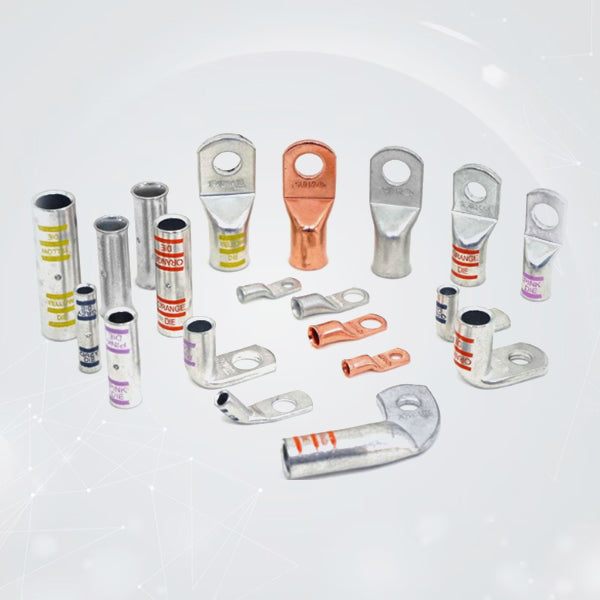


Why 4 AWG Lugs Are Ideal for Battery and Inverter Connections
When you're wiring up batteries or inverters, the cable size and lug choice make or break performance. Too small, and things overheat. Too big, and you're wasting money on unnecessary bulk.
4 AWG lugs hit the sweet spot for many setups. They pair perfectly with 4 AWG cable, handling serious current without drama. Whether you're building an RV solar bank, marine starting circuit, or home backup inverter, 4 awg wire lugs deliver reliable power transfer.
This isn't guesswork. It's about matching cable ampacity, connection strength, and real-world use cases. Here's why 4 gauge cable lugs and 4 gauge wire lugs belong on battery terminals and inverter studs.
The Perfect Match: 4 AWG Cable + 4 AWG Lugs
4 AWG cable carries 85-115 amps continuously, depending on insulation and length.
Perfect for:
- RV house batteries
- Marine starting circuits
- Solar charge controllers
- Inverter inputs under 3kW
- Winches and trolling motors
4 awg lugs fit this cable like a glove. The barrel accepts all strands fully. Proper crimp creates gas-tight contact. No loose ends. No overheating.
Bigger lugs (2 AWG, 2/0) work but add weight and cost. Smaller lugs (6 AWG, 8 AWG) can't handle the current safely. 4 AWG is right where most mid-size systems live.
Battery Terminal Connections That Last
Batteries demand solid lugs. Starting batteries need high burst current. Deep cycle banks cycle constantly. Both generate corrosive fumes.
4 gauge wire lugs excel here because:
Top post batteries (SAE terminals): 3/8" stud size perfect. Thick palm handles torque without bending.
Side post batteries: 5/16" lugs fit snug.
L16/Group 31 batteries: Common in RVs and solar. 4 AWG carries 100A+ easily.
Real example: RV camper with two Group 31 batteries feeding a 2000W inverter. 4 awg wire lugs kept voltage drop under 0.2V at full load. 6 AWG lugs would've overheated at 80A continuously.
The lug's heavy barrel resists vibration loosening. Battery bumps don't kill the connection.
Inverter Power Delivery Without Losses
Inverters convert DC to AC. They draw heavy current on startup. Pure sine wave models surge even higher.
A 2000W inverter at 12V pulls 200A peak. Even 1500W models hit 150A. 4 AWG lugs handle this cleanly.
Why they work:
Positive and negative bus connections: 1/4" or 5/16" studs common. 4 gauge cable lugs make full contact.
Low voltage drop: Keeps inverter happy, no shutdowns.
Cool operation: Proper crimp = low resistance = no heat buildup.
Solar forum users tested three setups. 6 AWG to inverter: 0.4V drop, hot lugs. 4 AWG with matching 4 awg lugs: 0.15V drop, barely warm. 2 AWG: Overkill at extra cost.
Marine and Winch Applications Love 4 AWG
Boats and off-road rigs push 4 awg lugs hard.
Trolling motors: 50-80A draw. 4 AWG cable + 4 gauge wire lugs standard.
Starting circuits: Cranking amps hit 400+. Lugs handle surge without welding to battery.
Winches: 100A pulls. Vibration tests lug strength constantly.
Saltwater eats bare copper. Tinned 4 awg wire lugs last seasons longer. Closed barrel keeps corrosion out.
Offshore fisherman reported: Saltwater washdown corroded 6 AWG bare lugs in one year. Tinned 4 AWG replacements are still clean after three seasons.
Solar Charge Controllers and Battery Banks
Mid-size solar systems (2-5kW) use 4 AWG extensively.
Controller to battery: 80-100A charging current. 4 gauge cable lugs sized right.
Battery interconnects: Parallel banks need even current sharing. Matching lugs prevent hot spots.
Deep cycle AGM or lithium banks cycle 100A+ daily. 4 awg lugs maintain low resistance through thousands of cycles.
Off-grid cabin owner: 48V system with four 6V batteries. 4 AWG interconnects with 4 gauge cable lugs. Zero voltage imbalance after two years. 6 AWG setup showed 0.3V difference between batteries.
Why Lug Quality Matters More at 4 AWG
Smaller lugs hide flaws. 4 AWG shows weak construction immediately.
Good 4 awg lugs have:
- Thick barrel walls (0.06"+)
- Seamless copper tube
- Chamfered barrel entry
- Clear size/stud markings
- UL listing
Thin lugs deform under crimp pressure. Poor copper overheats at 100A. Check weight – quality 4 gauge wire lugs feel substantial.
Stud Size Guide for Common Applications
The lug hole must match the terminal stud. Wrong size = arcing or stripped threads.
Battery posts: 3/8" most common
Inverter terminals: 1/4", 5/16", 3/8"
Controllers: 1/4", 5/16"
Bus bars: 5/16", 3/8"
Measure your stud. Buy matching 4 awg wire lugs. Oversized holes wobble. Undersized won't fit.
Crimping Done Right for 4 AWG
4 AWG demands proper tools. Ratchet crimper with hex or indent die. Not hammer dies or pliers.
Steps that work:
- Strip 3/4" insulation
- Insert full strands (twist lightly first)
- Position in die center
- Single firm crimp
- Tug test – shouldn't budge
- Heat shrink cover
Bad crimp = high resistance = 20°C+ hotter lugs.
Heat Shrink Makes 4 AWG Bulletproof
Never leave 4 gauge cable lugs bare. Vibration rubs strands. Moisture corrodes crimp.
Adhesive-lined 3:1 heat shrink:
- Seals against water
- Strain relief at flex points
- Professional finish
Marine-grade 4 AWG setups always use it. Saltwater finds bare crimps fast.
Cost vs Performance Reality
4 awg lugs cost $1-3 each. Worth every penny vs:
- Burned inverter ($800+)
- Melted cables ($200/meter)
- Dead batteries from undervoltage
- Hours troubleshooting hot connections
Quality set of 10 4 gauge wire lugs + crimper = $50 investment. Protects thousands in equipment.
Comparing to Other Sizes
| Cable Size | Typical Amps | Lug Barrel | Common Apps |
| 6 AWG | 55-75A | Small | Lighting, accessories |
| 4 AWG | 85-115A | Medium | Batteries, inverters, winches |
| 2 AWG | 130-170A | Large | Heavy inverters, alternators |
| 1/0 AWG | 200-250A | Extra large | Main battery cables, services |
4 AWG sweet spot. Enough capacity. Manageable to work with.
Maintenance Keeps 4 AWG Running Cool
Quarterly checks:
- Visual: discoloration, arcing marks
- Tug test: crimps solid
- Temperature: warm ok, hot = problem
- Torque studs: per spec
Clean corrosion yearly. Retorque after settling.
Final Thoughts
4 AWG lugs shine where mid-size power meets reliability. Batteries. Inverters. Solar controllers. Winches. Marine starting.
4 awg wire lugs deliver:
- Perfect cable match
- Solid battery terminal contact
- Efficient inverter power
- Vibration resistance
- Outdoor durability
4 gauge cable lugs and 4 gauge wire lugs balance cost, capacity, and ease. Under-sized risks heat. Oversized wastes money. 4 AWG hits right.