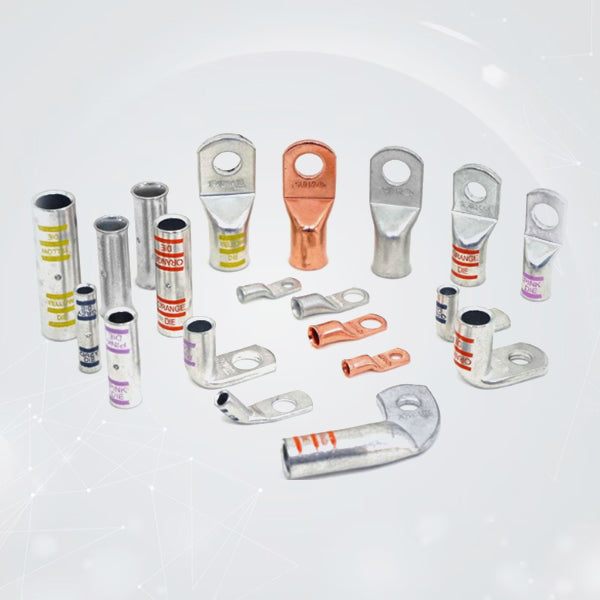


Why Tinned Copper Lugs Are the Go-To Choice for Long-Term Reliability
Imagine this scenario: You’ve spent weeks planning the perfect power system for your boat or off-grid cabin. You bought the best batteries, high-end cables, and a top-tier inverter. Everything works perfectly for the first few months. Then, seemingly out of nowhere, your inverter starts throwing "low voltage" codes. You check the batteries, and they're full. You check the cables, and they look fine.
Then you pull back the rubber boot on one of your connections and find a crusty, green mess where your shiny copper used to be.
This is the "Green Rot," and it is the primary reason why professional installers almost always reach for tinned copper lugs. While bare copper is the king of conductivity, it has a major weakness: it hates moisture. In the battle for long-term reliability, a thin layer of tin is the secret sauce that keeps your system running for years instead of months.
The Chemistry of "Set It and Forget It"
Copper is a highly reactive metal. When it is exposed to oxygen and moisture, it undergoes a chemical reaction called oxidation. In a dry living room, this might take years to happen. But in a humid engine bay, a coastal home, or a battery box, it happens fast.
Tinned copper cable lugs are created by coating high-purity copper with a microscopic layer of tin. This process does something remarkable. Tin is naturally resistant to corrosion and oxidation. By wrapping the copper in this protective "armor," you get the best of both worlds: the incredible power-carrying ability of copper and the rugged durability of tin.
When you use a tinned copper cable lug, you are essentially future-proofing your connection. The tin prevents that green oxidation layer from ever forming between the cable strands and the lug barrel. Since oxidation acts as an insulator, preventing it means your power flow stays at 100% efficiency for the life of the system.
Where Tinned Lugs Aren't Just Better—They're Essential
While you can get away with bare copper in some indoor settings, there are environments where using anything other than tinned copper battery lugs is asking for trouble.
1. The Marine Environment
Saltwater is the ultimate enemy of electricity. The salt in the air accelerates corrosion at an alarming rate. On a boat, a bare copper connection can degrade to the point of failure in a single season. Tinned lugs are the industry standard for marine wiring because they can handle the salt spray and high humidity without breaking a sweat.
2. RV and Van Life
Living on the road means your electrical system is constantly exposed to changing climates. One day you’re in the humid Southeast; the next you’re in a rainy coastal forest. This constant "cycling" of moisture in and out of your battery compartments makes tinned copper lugs non-negotiable for anyone who wants a reliable mobile home.
3. Outdoor Solar and Off-Grid Arrays
Battery boxes located in garages, sheds, or outdoor enclosures are prone to condensation. As temperatures shift from day to night, tiny droplets of water form on your terminals. Over time, this moisture seeps into the crimp. Tinned lugs stop this moisture from eating away at the connection from the inside out.
Does Tinning Hurt Performance?
A common question among DIYers is whether the tin plating reduces the conductivity of the connection. Technically, tin is less conductive than copper. However, in the real world of tinned copper battery lugs, the plating is so thin (usually only a few microns) that the difference in resistance is virtually immeasurable.
In fact, after six months in a real-world environment, a tinned lug will actually be more conductive than a bare copper lug. Why? Because the bare copper will have developed a layer of oxidation that creates resistance, while the tinned lug remains as clean as the day it was installed.
The "Internal" Benefit: Preventing Wick Corrosion
One of the most insidious types of electrical failure is "wicking." This is when moisture gets pulled up inside the cable insulation through the lug barrel. Once moisture is inside the cable, it begins to rot the copper strands where you can't see them.
Using high-quality tinned copper cable lugs paired with adhesive-lined heat shrink creates a dual-layer defense. The tin prevents the initial corrosion at the entry point, and the heat shrink seals the deal. This is how you build a "bulletproof" system that can survive a decade of hard use.
Comparing the Options: Which One Wins?
| Feature | Bare Copper Lugs | Tinned Copper Lugs |
| Initial Conductivity | 100% | 99.5% |
| Corrosion Resistance | Low | Extremely High |
| Visual Longevity | Turns green/dull | Stays bright/shiny |
| Typical Environment | Climate-controlled indoors | Marine, RV, Outdoor, Industrial |
| Reliability Rating | Good | Superior |
As you can see, for almost any application that isn't inside a perfectly dry, temperature-controlled server room, the tinned copper lug is the clear winner.
Installation Best Practices for Maximum Life
Even the best tinned copper lugs need to be installed correctly to do their job. If you’re looking to build the most reliable connection possible, follow these steps:
- Strip with Precision: Use a dedicated wire stripper to avoid nicking the strands. Any nicked strand is a potential point of failure.
- Verify the Fit: Ensure your 4 AWG, 2 AWG, or 1/0 wire fits snugly into the barrel. A loose fit means a poor crimp.
- The Cold-Weld Crimp: Use a heavy-duty crimping tool (like a hydraulic or long-handle hex crimper). You want to compress the tin-plated copper so tightly that it becomes a single, solid mass of metal.
- Heat Shrink is Key: Use 3:1 ratio heat shrink with an internal adhesive. When you heat it, the glue melts and creates a waterproof seal around the base of the lug.
Why Professionals Choose Selterm Tinned Lugs
When you browse the Selterm Tinned Copper Collection, you aren't just looking at generic hardware. These lugs are engineered for the high-stakes environments of marine and industrial power.
We use pure C11000 copper as the base and apply a consistent, high-quality tin plating that won't flake or peel during the crimping process. With multiple stud sizes and gauge options, they provide the flexibility needed for everything from small solar controllers to massive battery banks.
Conclusion
At the end of the day, the goal of any power system is to provide "invisible" service. You shouldn't have to think about your battery connections. You should just be able to flip a switch and have power.
By choosing tinned copper lugs, you are eliminating the most common cause of DC system failure. You are choosing a connection that looks and performs the same five years from now as it does today. It is a small investment in parts that pays massive dividends in peace of mind.
Ready to build a system that lasts? Explore our full range of Tinned Copper Battery Lugs and get your project done right the first time.
Are you working on a marine project or an outdoor solar setup that needs this level of protection?